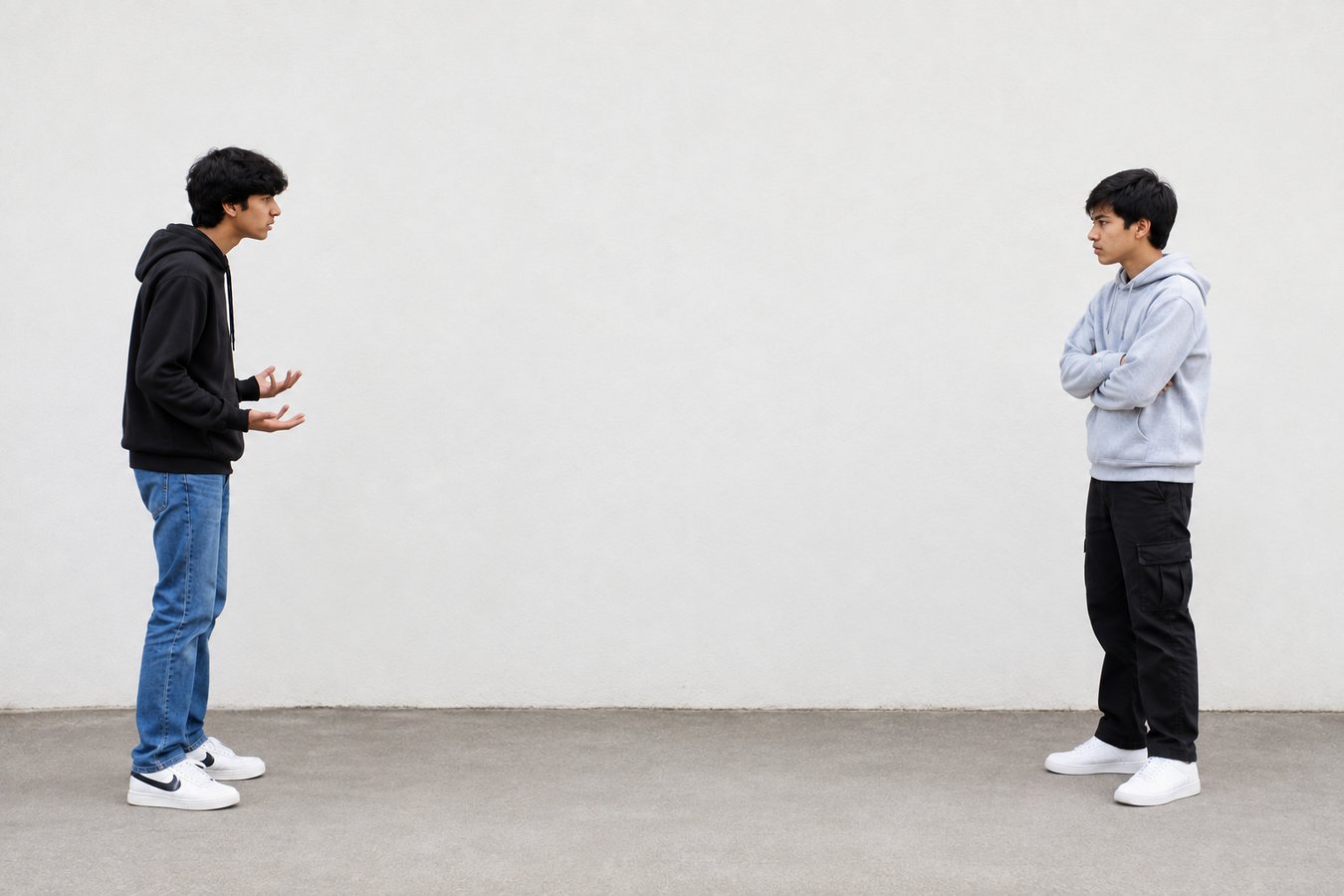
Most anti-bullying efforts focus on exactly two people: the child being bullied, and the child doing the bullying. Decades of research suggest that's precisely the wrong place to concentrate most of the effort.
A large body of evidence, including a comprehensive 2019 meta-analysis covering 100 separate anti-bullying programs, found that interventions targeting only the bully and the victim directly have had comparatively limited success, while whole-school approaches that also work with the students watching — the bystanders — show significantly stronger effects, reducing bullying perpetration by roughly 19–20% and victimization by 15–16% on average across evaluated programs. The single biggest lever isn't the two people everyone assumes. It's almost everyone else in the room.
The Program That Proved This at Scale
KiVa, developed in Finland by researcher Christina Salmivalli and colleagues at the University of Turku, was built specifically around this insight — that bullying is sustained largely by peer group dynamics and the roles bystanders play, not just the direct interaction between bully and target. A landmark randomized controlled trial involving over 30,000 children across 234 Finnish schools found that KiVa significantly reduced both self-reported victimization and bullying perpetration, with effects strong enough that the programme has since scaled to over 90% of Finnish public schools.
One specific finding from the KiVa research deserves particular attention: empathy alone isn't enough. Many students who feel real empathy for a bullied classmate still don't act on it — largely because they don't have a safe, concrete way to intervene. KiVa's approach doesn't just try to build more empathy; it explicitly teaches students specific, low-risk strategies for supporting a targeted peer. That distinction — feeling for someone versus knowing what to actually do — is where a lot of well-intentioned anti-bullying education quietly falls short.
How SEL Protects a Child Who Is Being Targeted
It's worth being careful and explicit here: building emotional skills in a targeted child is never about implying the bullying is their fault or their responsibility to prevent. Bullying is fundamentally the bully's behaviour and the environment's failure to stop it — not a character flaw in the child being targeted. With that said, specific skills genuinely do help a targeted child cope, recover, and access support faster:
- Emotional vocabulary and self-awareness help a child recognize and name what's happening to them clearly enough to describe it to a trusted adult — many children struggle to report bullying not from fear alone, but because they genuinely can't articulate the pattern they're experiencing.
- A strong, trusted relationship with at least one adult — a finding echoed across resilience research generally — is one of the most consistently protective factors for a child navigating bullying, providing both emotional support and a reliable channel for the behaviour to actually get addressed.
- Assertive communication skills, distinct from aggression, can help in some situations, though it's worth being honest that assertiveness alone doesn't resolve bullying that's being reinforced or ignored by a peer group or school environment — this is support, not a substitute for adult intervention.
How SEL Reduces the Likelihood of a Child Becoming a Bully
Research on children who bully consistently identifies patterns worth addressing directly, rather than through punishment alone:
- Empathy deficits — difficulty genuinely registering another child's distress — show up disproportionately among children who bully repeatedly, which is exactly the skill deliberate SEL instruction targets directly.
- A need for social status or control, often stemming from feeling powerless in another part of a child's life, frequently underlies bullying behaviour — addressing the underlying need, not just punishing the behaviour, tends to produce more durable change.
- Self-regulation gaps mean some bullying stems less from calculated cruelty than from an inability to manage frustration or social friction constructively — the same regulation skills built through broader SEL instruction directly reduce this pathway.
None of this excuses bullying behaviour or removes consequences where they're warranted. It does mean that purely punitive responses, without any skill-building component, tend to underperform approaches that address the underlying gap — a pattern that shows up consistently across the broader anti-bullying research, not just in KiVa specifically.
How SEL Transforms Bystanders Into Defenders
This is the lever the research points to most strongly, and the one most schools underuse. A few specific, teachable shifts:
- Naming the bystander's real power directly. Most bystanders don't think of their silence as a choice with consequences — naming it explicitly ("staying quiet is also a choice that affects what happens here") shifts the framing in a way vague appeals to kindness rarely do.
- Teaching specific, low-risk intervention scripts, not just "be kind." A bystander who knows exactly what to say — "hey, that's not okay" or simply checking in with the targeted child afterward — is far more likely to act than one who only feels vaguely that they should.
- Building peer group norms where defending, not staying silent, is the expected behaviour. Research on classroom dynamics has found that a classroom's baseline norm — whether staying silent or speaking up is what's socially expected — significantly predicts how often bystanders actually intervene.
What Parents and Schools Should Do Next
If your child is being bullied: Focus first on connection and belief, not immediate problem-solving — a child needs to feel heard before any solution will land. Then work with the school directly on a concrete plan, since individual coping skills alone can't substitute for the adult intervention bullying situations genuinely require.
If you're concerned your child may be bullying others: Address it directly and calmly, focusing on the underlying skill gap — empathy, regulation, unmet need for status — rather than punishment alone. This isn't about excusing the behaviour; it's about actually changing it, which punishment by itself has a mixed track record of doing.
If you're a parent of a bystander (which, statistically, is most children at some point): Talk explicitly about what to do, not just how to feel. Give your child specific, low-risk scripts for supporting a targeted peer, and name clearly that silence is itself a choice with real consequences.
If you're a school leader: The research is fairly clear that whole-school, bystander-focused approaches significantly outperform interventions aimed only at the two most visible participants. If your current anti-bullying policy addresses only the bully and the victim, it's missing the lever the evidence points to most strongly.
Bullying was never really a two-person problem, even though it's almost always treated like one. The strongest evidence-based programs succeed precisely because they widen the lens — building the emotional skills that change what everyone in the room, not just the two people at the center of it, actually does next.
Happy Sprout Action: Want your child building the empathy, assertiveness, and bystander confidence this research points to as most protective? Register your child for a live Happy Sprout SEL class at happysproutminds.com — and if you're evaluating whole-school approaches, explore our school partnership programmes at the same link.
Future Starts Within.