Blogs

10 Things Indian Parents Say That Accidentally Block Their Child's Self-Awareness SEL
10 Things Indian Parents Say That Accidentally Block Their Child's Self-Awareness
Read more
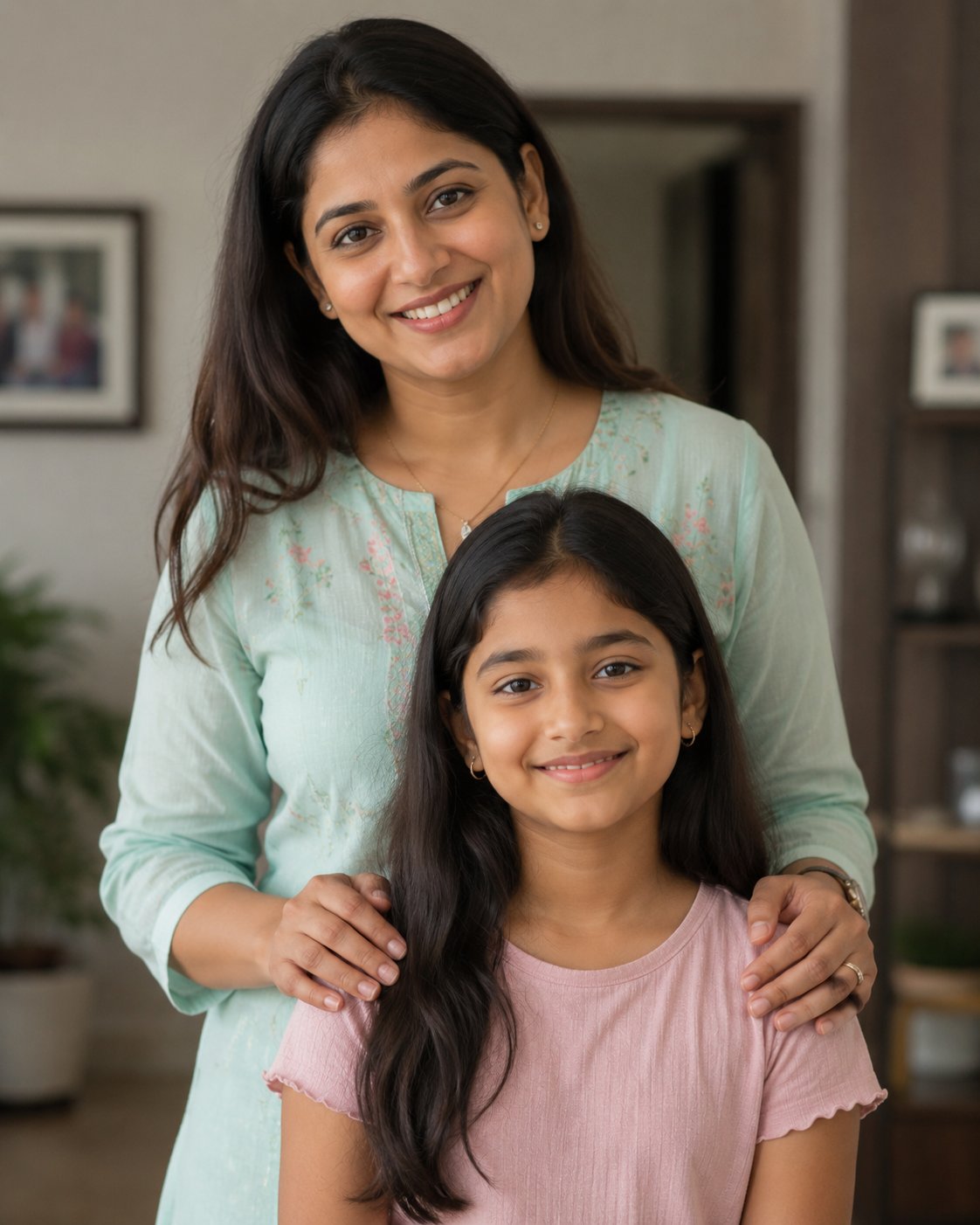
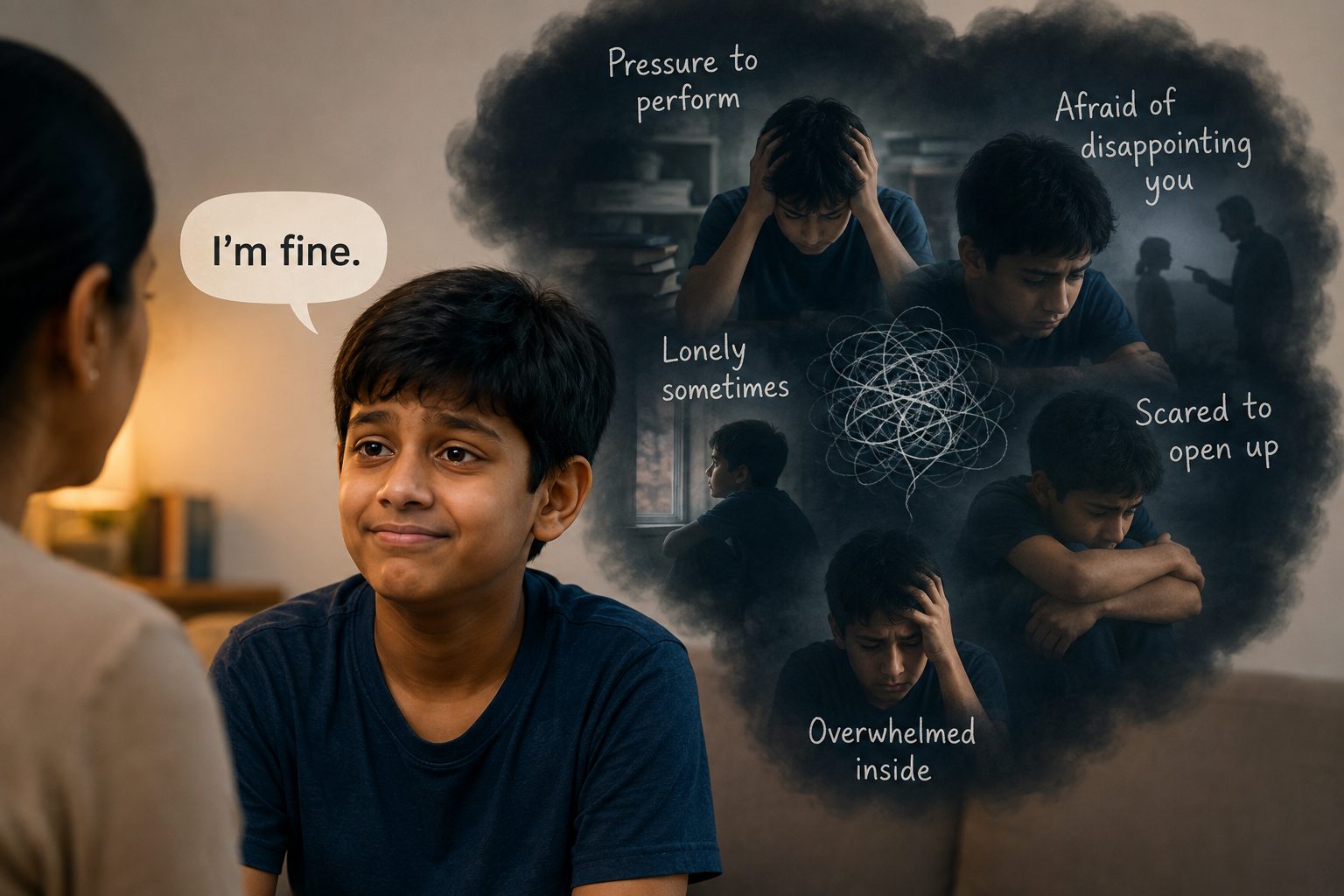
Why Your Child Lies to You About Being 'Fine' — And What They're Actually Feeling Inside SEL
Why Your Child Lies to You About Being 'Fine' — And What They're Actually Feeling Inside
Read more
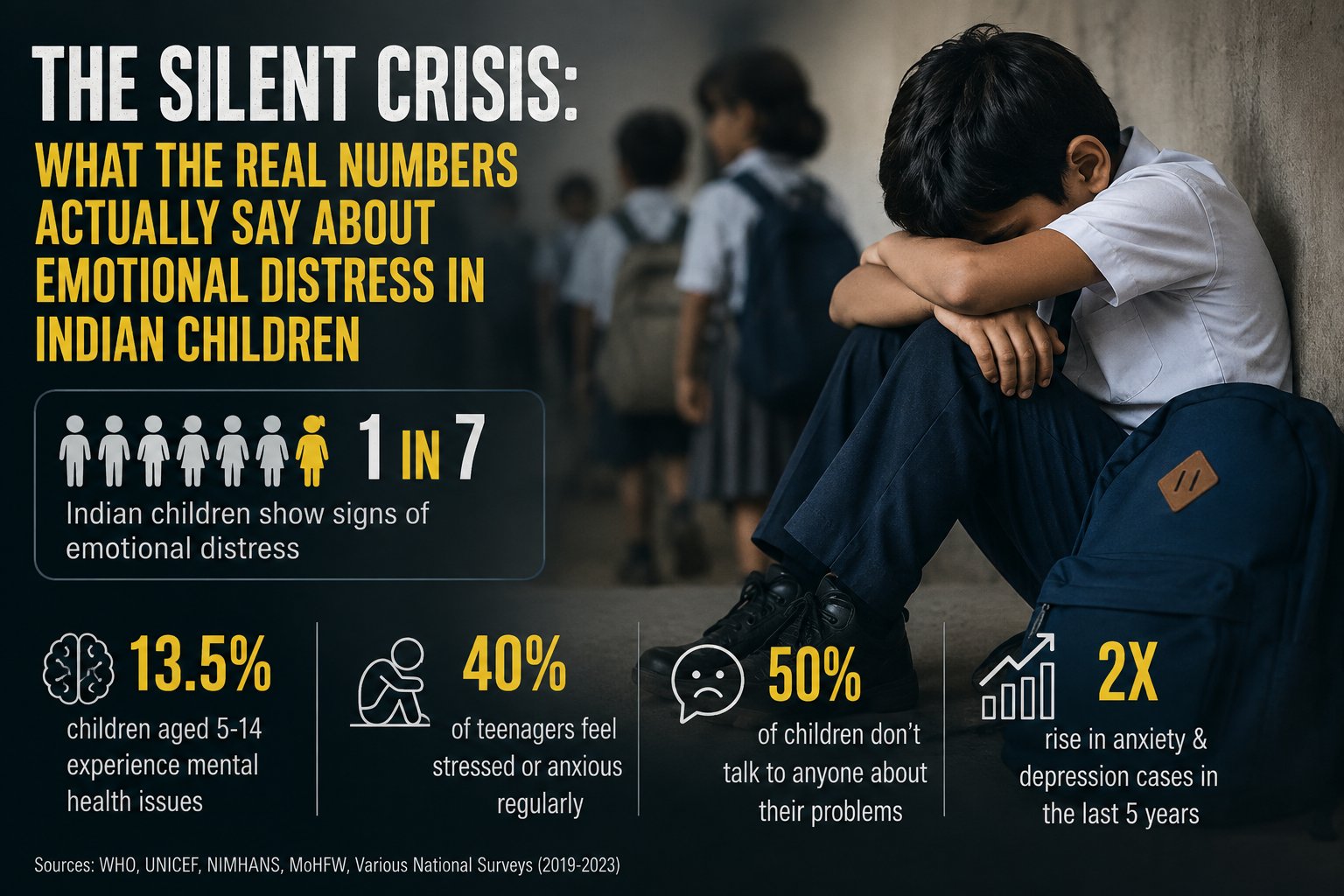
The Silent Crisis: What the Real Numbers Actually Say About Emotional Distress in Indian Children SEL
The Silent Crisis: What the Real Numbers Actually Say About Emotional Distress in Indian Children
Read more

Your Child Scored 95% — But Can They Handle Rejection? The Question Parents Avoid SEL
Your Child Scored 95% — But Can They Handle Rejection? The Question Parents Avoid
Read more

The Confidence Myth: Why Telling Your Child 'You're Amazing' Is Actually Backfiring SEL
The Confidence Myth: Why Telling Your Child 'You're Amazing' Is Actually Backfiring
Read more
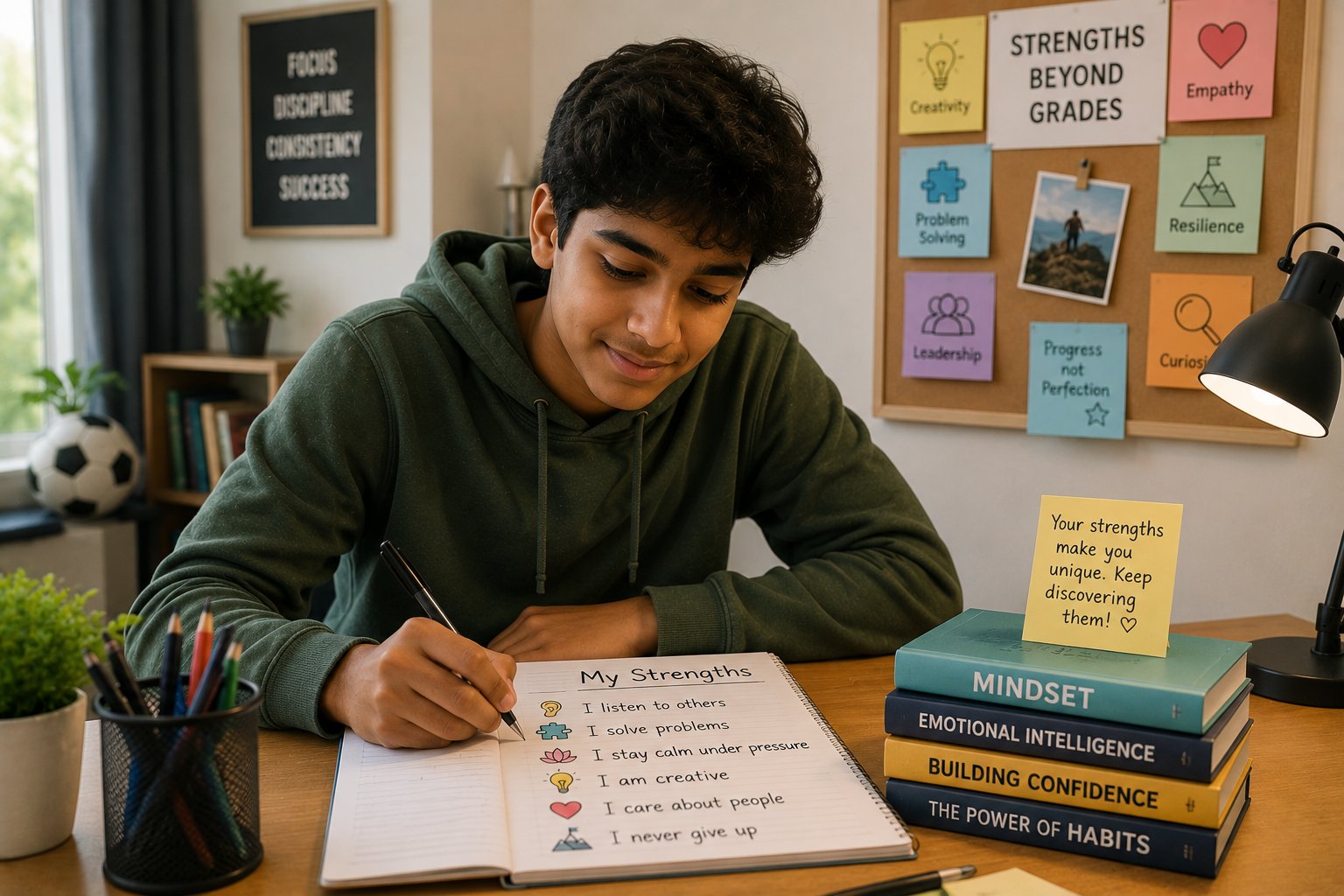
Your Child's Hidden Strengths: The Assessment Schools Never Give (But Should) SEL
Your Child's Hidden Strengths: The Assessment Schools Never Give (But Should)
Read more
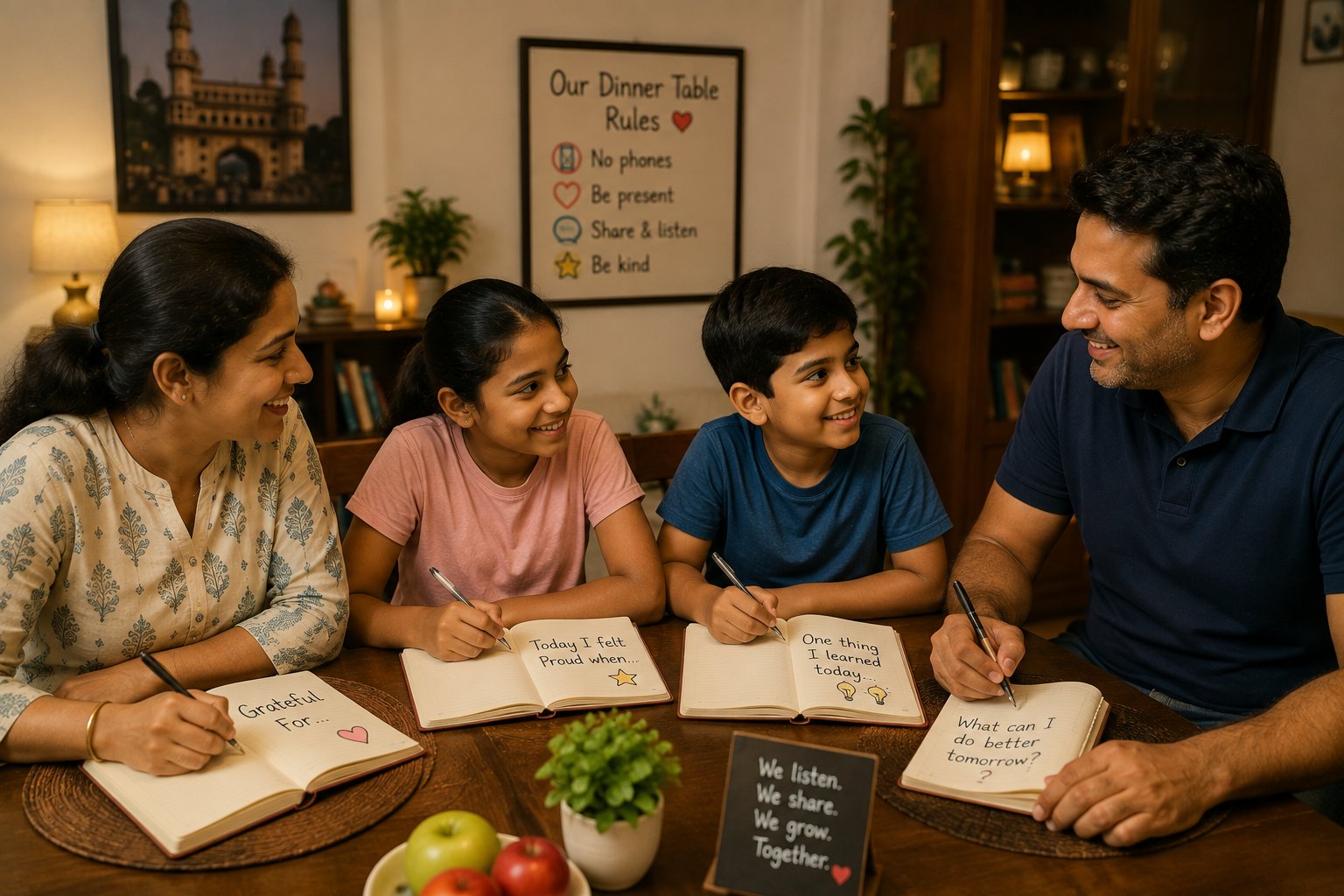
The Journaling Habit That Changed One Family's Dinner Table Forever SEL
The Journaling Habit That Changed One Family's Dinner Table Forever
Read more
Growth Mindset Is Not Enough: Why Your Child Also Needs an 'Emotion Mindset' SEL
Growth Mindset Is Not Enough: Why Your Child Also Needs an 'Emotion Mindset'
Read more

Why 'What's Wrong With You?' Is the Most Damaging Question in Indian Parenting SEL
Why 'What's Wrong With You?' Is the Most Damaging Question in Indian Parenting
Read more
Mirror Test: Ask Your Child These 5 Questions Tonight - Their Answers Will Surprise You SEL
Mirror Test: Ask Your Child These 5 Questions Tonight - Their Answers Will Surprise You
Read more
Body Signals Your Child Doesn't Understand: Why Stomach aches Before School Aren't Physical SEL
Body Signals Your Child Doesn't Understand: Why Stomach aches Before School Aren't Physical
Read more

The 'I'm Fine' Generation: Why So Many Children Have Forgotten How to Feel SEL
The 'I'm Fine' Generation: Why So Many Children Have Forgotten How to Feel
Read more
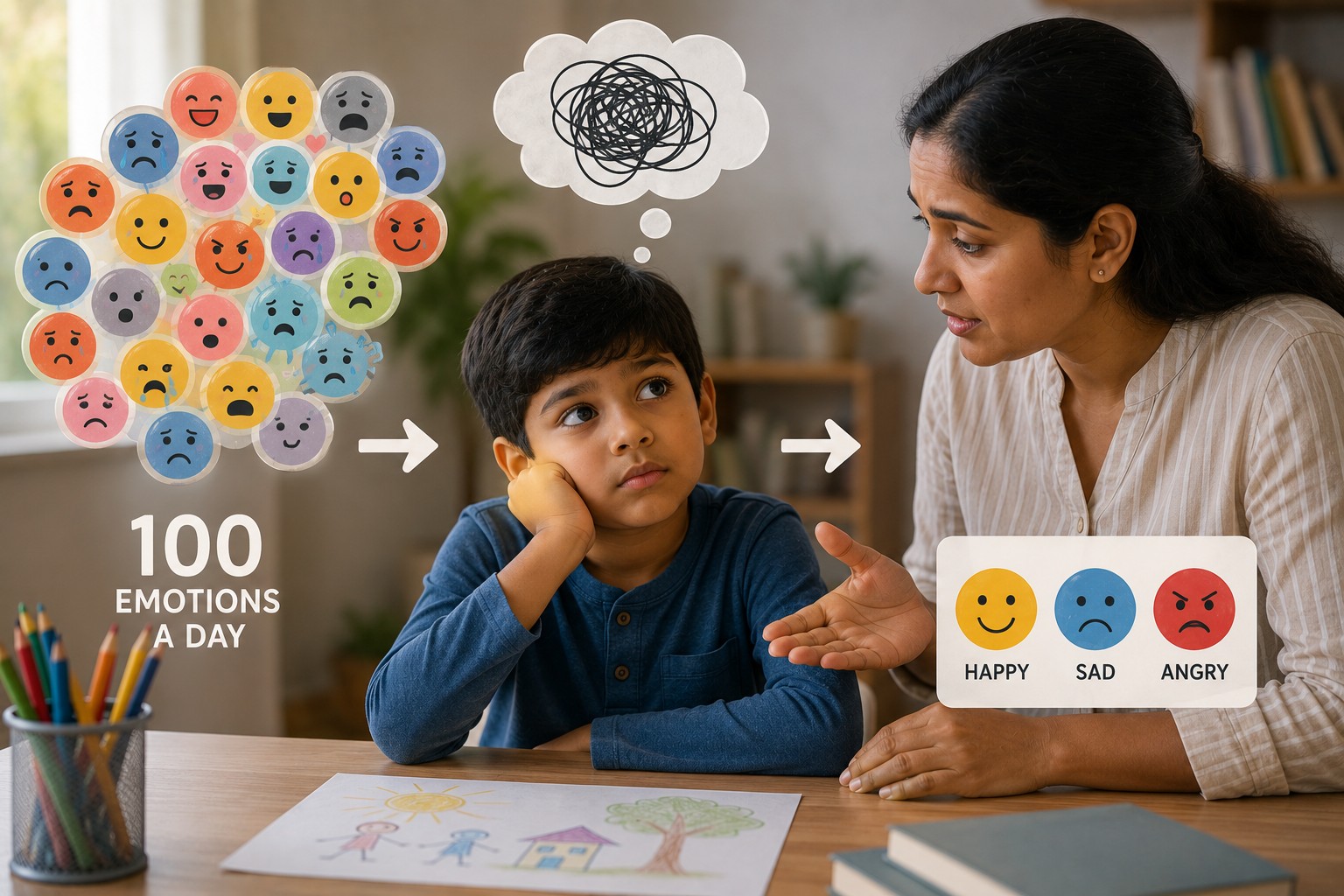
Your Child Feels 100 Emotions a Day — But Can Only Name 3. Here's Why That Matters.  Picture your child's actual internal experience across an ordinary day: the small flash of dread before a test, the flicker of pride after a good answer, the low hum of boredom during a long car ride, the sharp sting of being left out at lunch, the quiet relief of getting home. A child's nervous system moves through a genuinely large number of distinct emotional states across a single day — researchers studying moment-to-moment affect consistently find people cycle through far more emotional shifts than they'd ever report if you simply asked "how do you feel?" once.  Now compare that to the vocabulary most children actually have on hand to describe any of it: happy, sad, mad, and maybe "fine." That's the entire toolkit for translating a rich, constantly shifting internal world into words a parent or teacher can actually understand and respond to. The gap between what a child feels and what a child can say is enormous — and it's almost never talked about directly.  What the Research Actually Shows About This Gap  A large developmental study tracking emotion word comprehension in children aged 4 to 16 found something specific and useful: a child's emotional vocabulary roughly doubles every two years between ages 4 and 11, before the rate of growth levels off in adolescence. That's a genuinely fast trajectory — but it means a six-year-old is still operating with a fraction of the vocabulary a well-supported eleven-year-old will eventually have, and a huge fraction of that growth depends on deliberate exposure, not automatic maturation alone.  Separate research on preschoolers found something equally important: the size of a young child's emotion-specific vocabulary directly predicts their actual ability to regulate their emotions — not just their ability to talk about feelings, but their real, observed capacity to manage anger, frustration, and distress in the moment. Vocabulary isn't a side effect of emotional development. It's one of the engines driving it.  Why This Gap Gets Misread as an Attitude Problem  Here's the part that matters most for parents day to day: a child who can't name what they're feeling doesn't stop having the feeling. They just express it the only way still available to them — through behaviour.  A child who's genuinely feeling excluded, embarrassed, or overwhelmed, but only has "mad" in their working vocabulary, will often present as defiant, sulky, or disruptive — because "mad" is the closest available label, and the behaviour that follows tends to match whatever word the child actually reached for internally, not the more precise feeling underneath it. Parents and teachers, seeing only the behaviour, frequently read this as an attitude problem or a discipline issue — when the underlying issue is closer to a translation failure: the feeling existed, but the words to communicate it accurately simply weren't there yet.  This reframe changes what the right response actually is. A child labeled as having "an attitude" gets consequences aimed at the behaviour. A child understood as having a vocabulary gap gets something entirely different: more words, offered patiently, in calm moments — which, per the regulation research above, is also the more effective long-term fix.  Why Guessing at This Gap Doesn't Work  Here's the honest challenge for any parent trying to address this: you can't easily see your own child's specific vocabulary gap from the outside. Two eight-year-olds can look identically frustrated on the surface while one has access to "disappointed, embarrassed, and anxious" as separate, usable concepts, and the other genuinely only has "mad" for all three. Without some way of actually checking, most parents are guessing — usually assuming their child's vocabulary is broader than it actually is, simply because the child seems verbally capable in every other context.  This is exactly the gap a structured assessment is built to surface — not a vague sense of "my child seems to talk about feelings okay," but an actual picture of which specific emotion words a child can reliably identify and use, measured against what's realistic for their age.  What to Do About It, Starting Today  Get an honest baseline, not a guess. Before assuming your child's vocabulary is where it should be, find a real way to check — a structured quiz or assessment gives you an actual number to work from, rather than an impression.  Introduce one new word at a time, in calm moments. The doubling-every-two-years trajectory the research describes isn't automatic — it happens fastest with deliberate exposure. Offering "disappointed" instead of accepting "mad" as the final word, repeated patiently over weeks, is what actually drives that growth curve.  Reframe "attitude" moments as possible vocabulary gaps first. Before reaching for a consequence, consider whether the behaviour in front of you might be the closest available expression of a feeling your child genuinely doesn't have a more precise word for yet.  Revisit the gap periodically, not just once. A vocabulary assessment isn't a one-time diagnosis — a child's emotional lexicon is supposed to be expanding constantly through these years, so checking in periodically shows you whether the growth is actually happening or has stalled.  What to Do This Week Take stock of your child's actual working vocabulary this week — notice, honestly, how many distinct feeling-words they reach for versus how often "mad," "sad," or "fine" cover everything. The next time a behaviour looks like "attitude," pause and ask whether it might be a vocabulary gap instead — and offer a more precise word as a genuine alternative, not a correction. Try a structured emotion vocabulary check, rather than relying on impression alone, to see exactly where your child's vocabulary sits against what's realistic for their age.  The gap between what your child feels and what your child can say was never a minor detail. It's very often the actual mechanism behind the "attitude" moments that frustrate parents most — and unlike a fixed personality trait, it's one of the most directly, quickly closeable gaps in a child's entire emotional development.  Happy Sprout Action: Want to know exactly where your child's emotional vocabulary actually stands? Take Happy Sprout's free Emotion Vocabulary Quiz at happysproutminds.com — get a clear picture of how many emotions your child can currently name against the age-appropriate benchmark, and register for a live Happy Sprout SEL class to start closing the gap with a trained facilitator.  Future Starts Within. SEL
Your Child Feels 100 Emotions a Day — But Can Only Name 3. Here's Why That Matters. Picture your child's actual internal experience across an ordinary day: the small flash of dread before a test, the flicker of pride after a good answer, the low hum of boredom during a long car ride, the sharp sting of being left out at lunch, the quiet relief of getting home. A child's nervous system moves through a genuinely large number of distinct emotional states across a single day — researchers studying moment-to-moment affect consistently find people cycle through far more emotional shifts than they'd ever report if you simply asked "how do you feel?" once. Now compare that to the vocabulary most children actually have on hand to describe any of it: happy, sad, mad, and maybe "fine." That's the entire toolkit for translating a rich, constantly shifting internal world into words a parent or teacher can actually understand and respond to. The gap between what a child feels and what a child can say is enormous — and it's almost never talked about directly. What the Research Actually Shows About This Gap A large developmental study tracking emotion word comprehension in children aged 4 to 16 found something specific and useful: a child's emotional vocabulary roughly doubles every two years between ages 4 and 11, before the rate of growth levels off in adolescence. That's a genuinely fast trajectory — but it means a six-year-old is still operating with a fraction of the vocabulary a well-supported eleven-year-old will eventually have, and a huge fraction of that growth depends on deliberate exposure, not automatic maturation alone. Separate research on preschoolers found something equally important: the size of a young child's emotion-specific vocabulary directly predicts their actual ability to regulate their emotions — not just their ability to talk about feelings, but their real, observed capacity to manage anger, frustration, and distress in the moment. Vocabulary isn't a side effect of emotional development. It's one of the engines driving it. Why This Gap Gets Misread as an Attitude Problem Here's the part that matters most for parents day to day: a child who can't name what they're feeling doesn't stop having the feeling. They just express it the only way still available to them — through behaviour. A child who's genuinely feeling excluded, embarrassed, or overwhelmed, but only has "mad" in their working vocabulary, will often present as defiant, sulky, or disruptive — because "mad" is the closest available label, and the behaviour that follows tends to match whatever word the child actually reached for internally, not the more precise feeling underneath it. Parents and teachers, seeing only the behaviour, frequently read this as an attitude problem or a discipline issue — when the underlying issue is closer to a translation failure: the feeling existed, but the words to communicate it accurately simply weren't there yet. This reframe changes what the right response actually is. A child labeled as having "an attitude" gets consequences aimed at the behaviour. A child understood as having a vocabulary gap gets something entirely different: more words, offered patiently, in calm moments — which, per the regulation research above, is also the more effective long-term fix. Why Guessing at This Gap Doesn't Work Here's the honest challenge for any parent trying to address this: you can't easily see your own child's specific vocabulary gap from the outside. Two eight-year-olds can look identically frustrated on the surface while one has access to "disappointed, embarrassed, and anxious" as separate, usable concepts, and the other genuinely only has "mad" for all three. Without some way of actually checking, most parents are guessing — usually assuming their child's vocabulary is broader than it actually is, simply because the child seems verbally capable in every other context. This is exactly the gap a structured assessment is built to surface — not a vague sense of "my child seems to talk about feelings okay," but an actual picture of which specific emotion words a child can reliably identify and use, measured against what's realistic for their age. What to Do About It, Starting Today Get an honest baseline, not a guess. Before assuming your child's vocabulary is where it should be, find a real way to check — a structured quiz or assessment gives you an actual number to work from, rather than an impression. Introduce one new word at a time, in calm moments. The doubling-every-two-years trajectory the research describes isn't automatic — it happens fastest with deliberate exposure. Offering "disappointed" instead of accepting "mad" as the final word, repeated patiently over weeks, is what actually drives that growth curve. Reframe "attitude" moments as possible vocabulary gaps first. Before reaching for a consequence, consider whether the behaviour in front of you might be the closest available expression of a feeling your child genuinely doesn't have a more precise word for yet. Revisit the gap periodically, not just once. A vocabulary assessment isn't a one-time diagnosis — a child's emotional lexicon is supposed to be expanding constantly through these years, so checking in periodically shows you whether the growth is actually happening or has stalled. What to Do This Week Take stock of your child's actual working vocabulary this week — notice, honestly, how many distinct feeling-words they reach for versus how often "mad," "sad," or "fine" cover everything. The next time a behaviour looks like "attitude," pause and ask whether it might be a vocabulary gap instead — and offer a more precise word as a genuine alternative, not a correction. Try a structured emotion vocabulary check, rather than relying on impression alone, to see exactly where your child's vocabulary sits against what's realistic for their age. The gap between what your child feels and what your child can say was never a minor detail. It's very often the actual mechanism behind the "attitude" moments that frustrate parents most — and unlike a fixed personality trait, it's one of the most directly, quickly closeable gaps in a child's entire emotional development. Happy Sprout Action: Want to know exactly where your child's emotional vocabulary actually stands? Take Happy Sprout's free Emotion Vocabulary Quiz at happysproutminds.com — get a clear picture of how many emotions your child can currently name against the age-appropriate benchmark, and register for a live Happy Sprout SEL class to start closing the gap with a trained facilitator. Future Starts Within.
Read more
How to Raise Children Who Take Responsibility for Their Actions SEL
How to Raise Children Who Take Responsibility for Their Actions
Read more
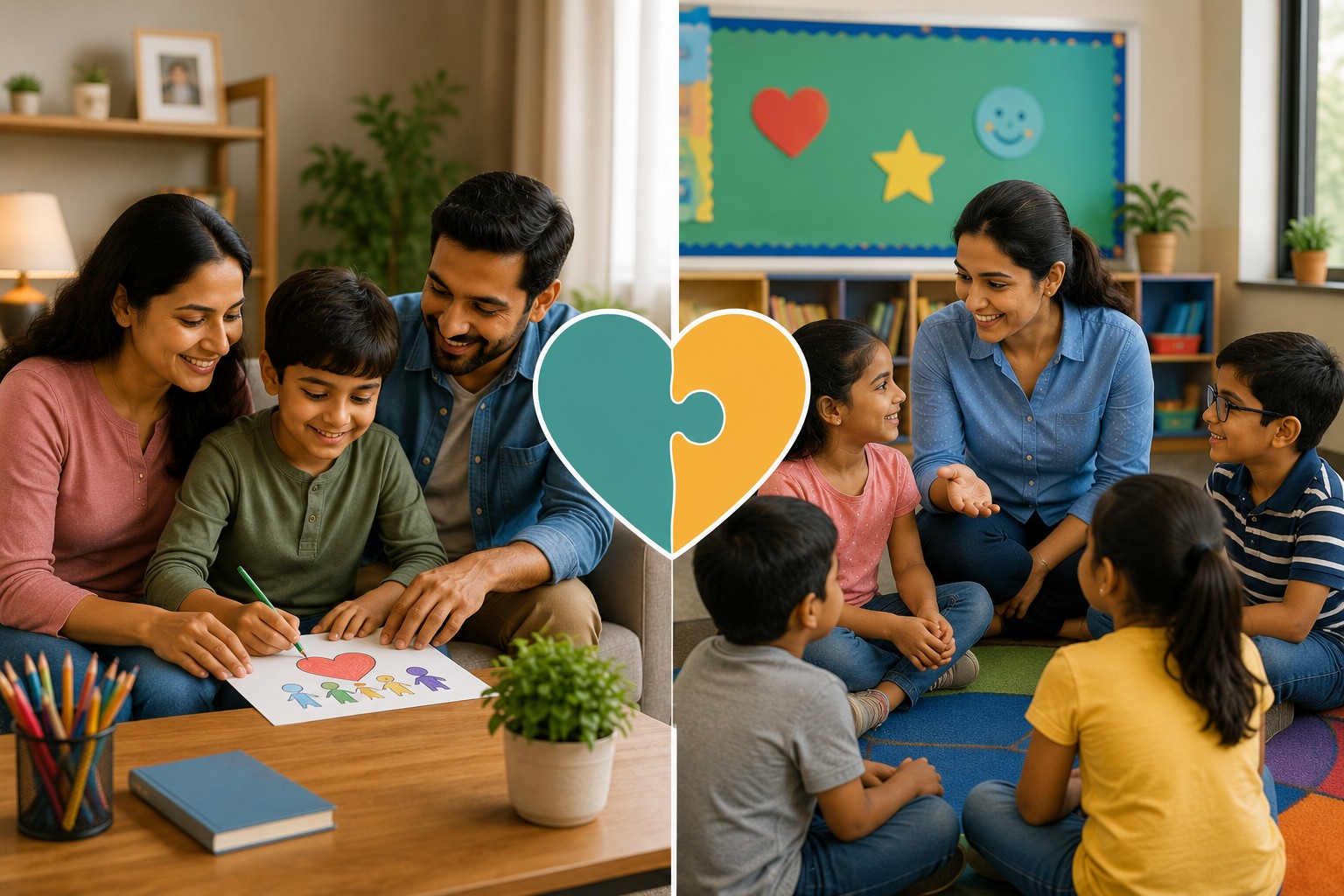
SEL at Home vs SEL at School: How to Make Them Work Together SEL
SEL at Home vs SEL at School: How to Make Them Work Together
Read more
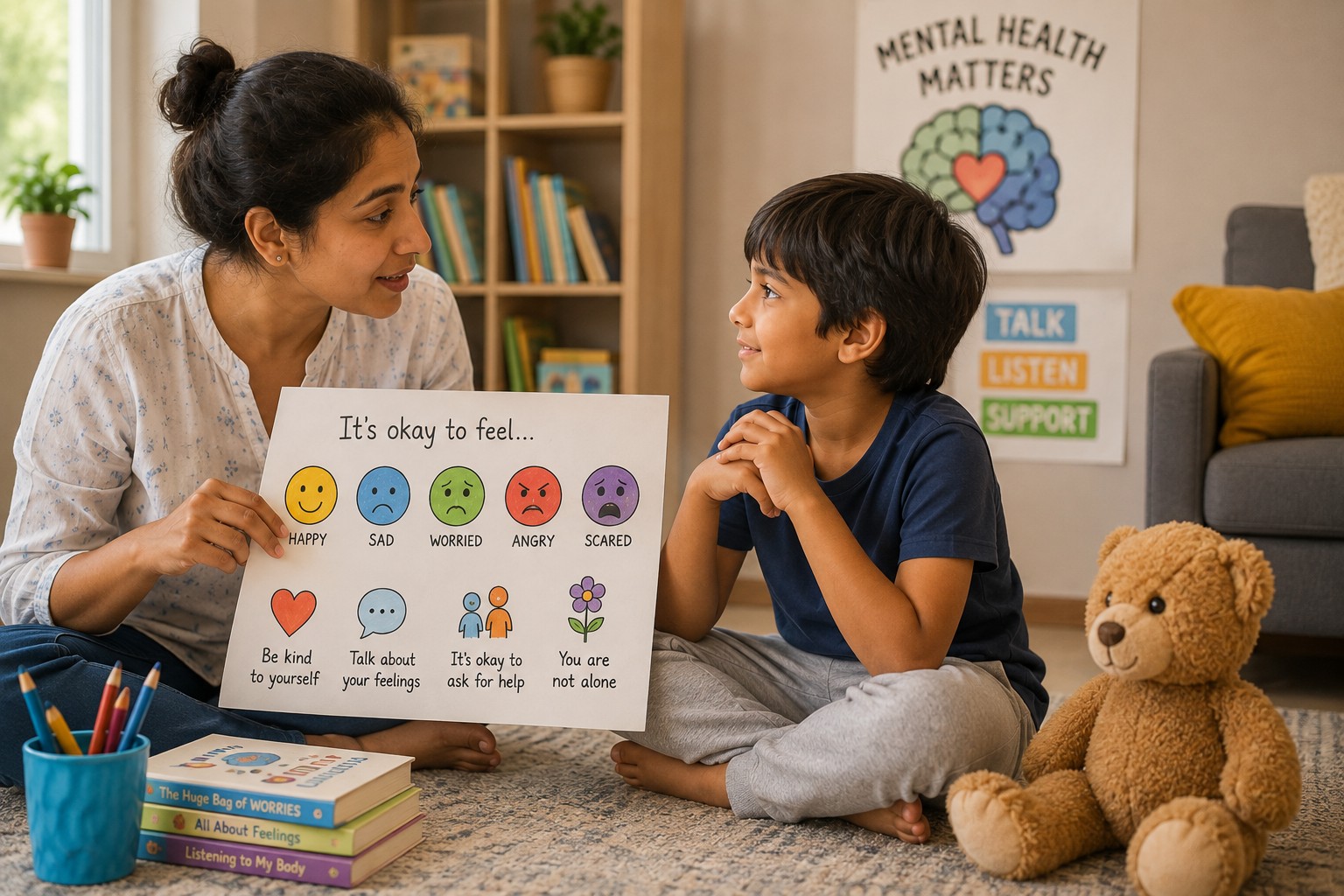
How to Teach Children About Mental Health Without Stigma SEL
How to Teach Children About Mental Health Without Stigma
Read more

What Corporate Recruiters Say About Why Indian Graduates Fail (And How SEL Fixes It) SEL
What Corporate Recruiters Say About Why Indian Graduates Fail (And How SEL Fixes It)
Read more
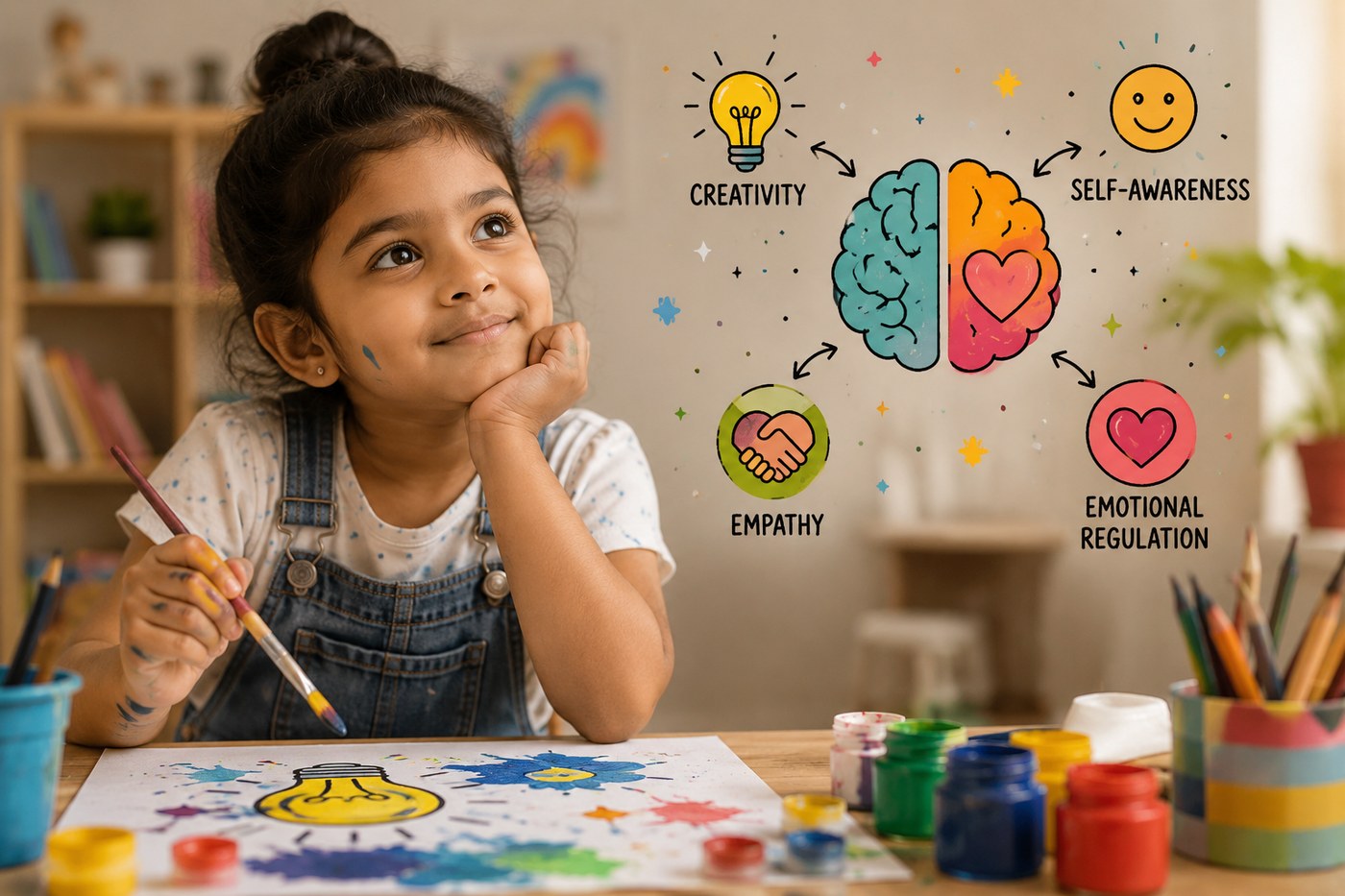
The Connection Between Creativity and Emotional Intelligence in Children SEL
The Connection Between Creativity and Emotional Intelligence in Children
Read more
How to Help Your Child Deal with Rejection and Disappointment SEL
How to Help Your Child Deal with Rejection and Disappointment
Read more
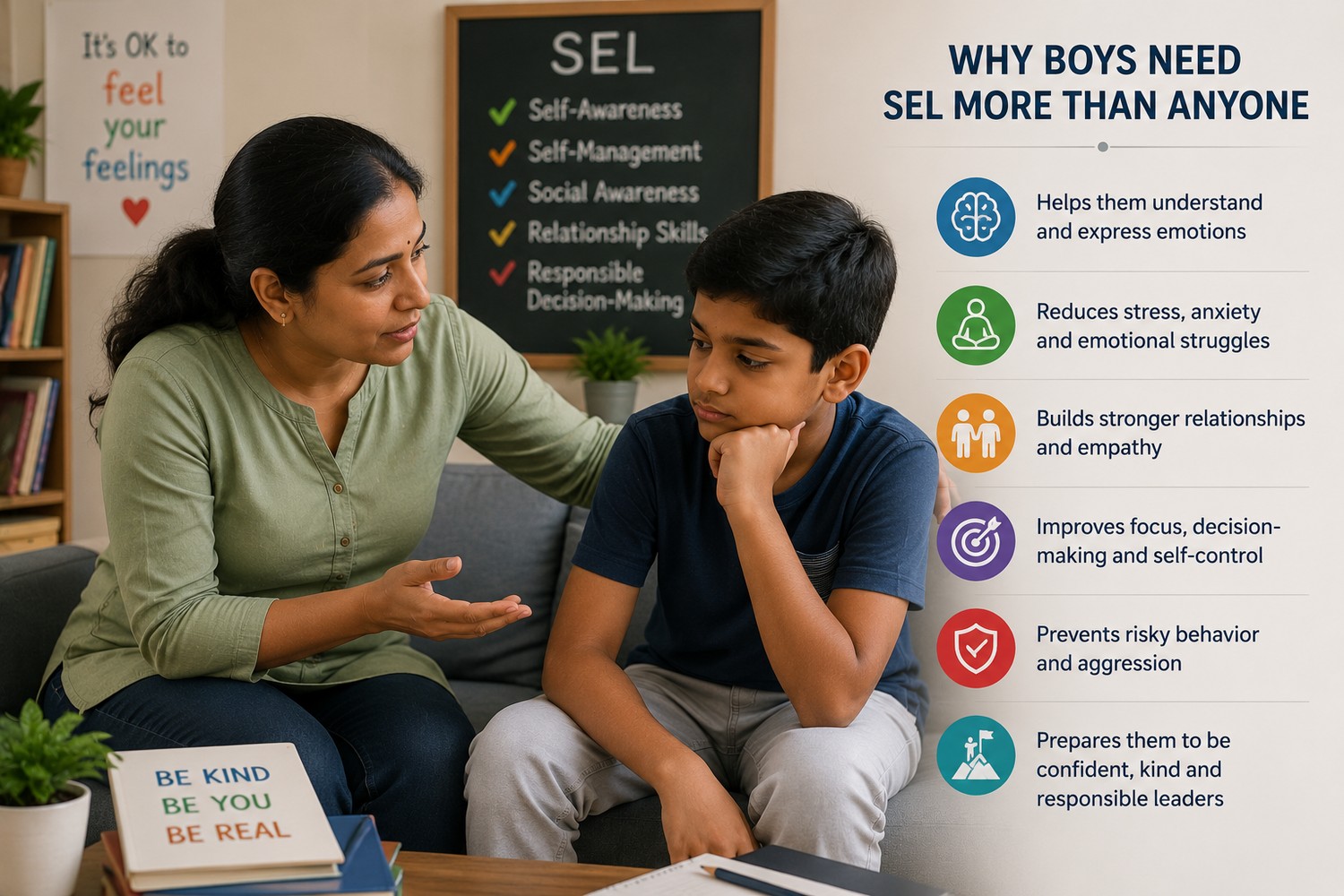
Why Boys Need SEL More Than Anyone (And Why We Are Failing Them) SEL
Why Boys Need SEL More Than Anyone (And Why We Are Failing Them)
Read more

Building Leadership Skills in Children Through SEL: A Guide for Parents and Schools SEL
Building Leadership Skills in Children Through SEL: A Guide for Parents and Schools
Read more
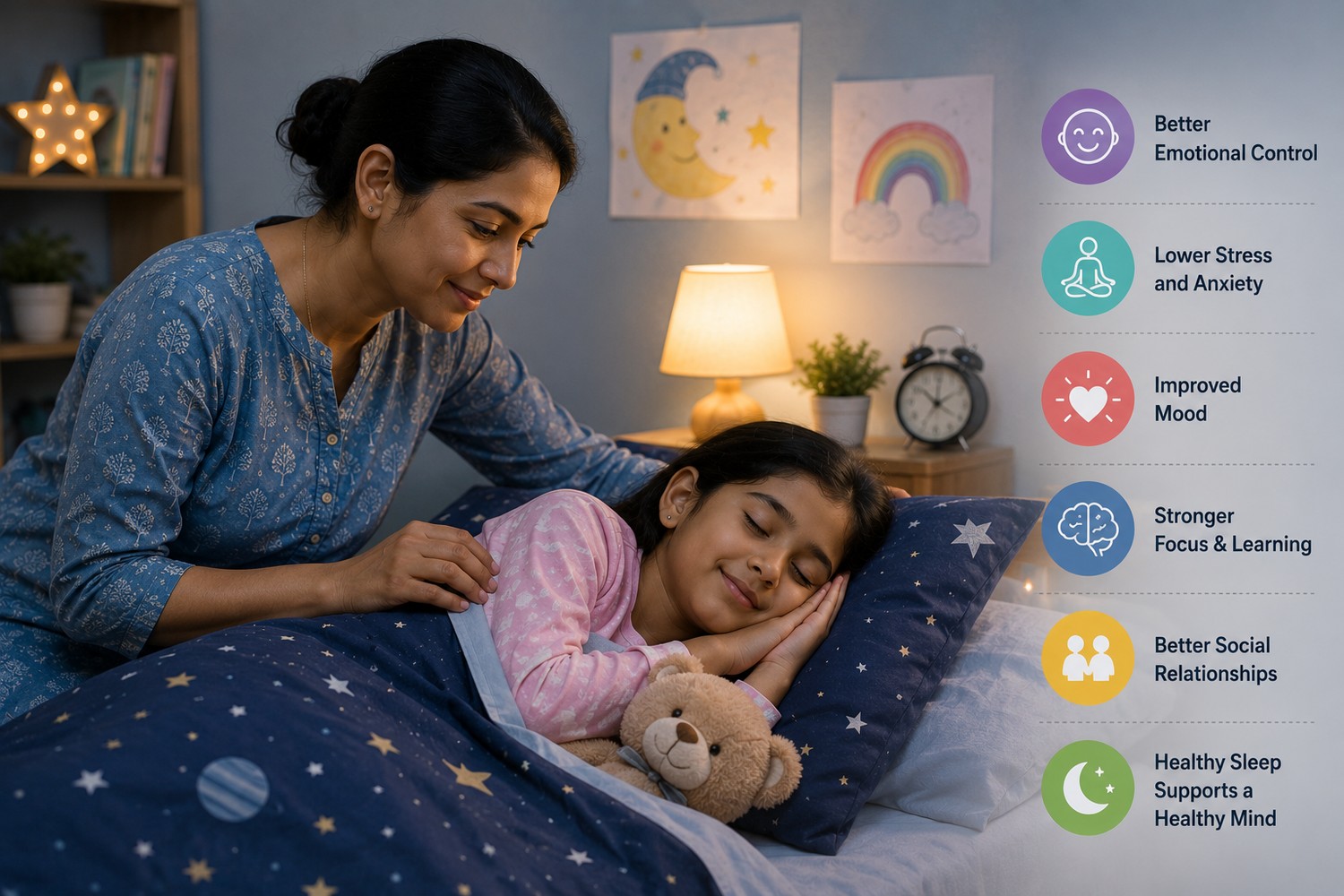
The Role of Sleep in Children's Emotional Regulation: What Every Parent Needs to Know SEL
The Role of Sleep in Children's Emotional Regulation: What Every Parent Needs to Know
Read more

How Indian Festivals and Traditions Teach Social Emotional Skills (Without You Realising It) SEL
How Indian Festivals and Traditions Teach Social Emotional Skills (Without You Realising It)
Read more

How to Integrate SEL into Every Subject: A Teacher's Practical Guide SEL
How to Integrate SEL into Every Subject: A Teacher's Practical Guide
Read more
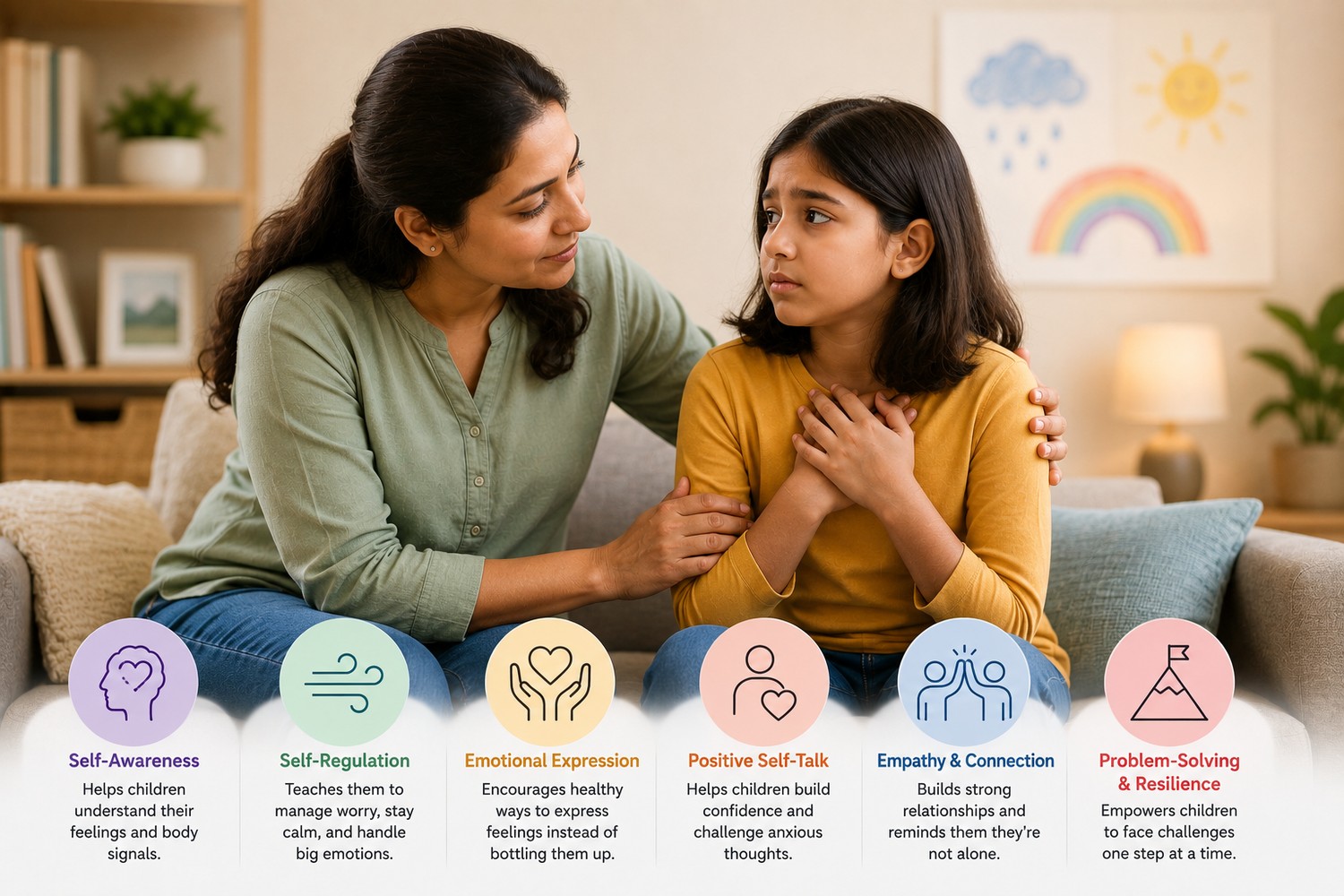
Helping Children with Anxiety: What Emotional Skills Make the Biggest Difference SEL
Helping Children with Anxiety: What Emotional Skills Make the Biggest Difference
Read more

How to Build a Strong Parent-Child Relationship Through Emotional Intelligence SEL
How to Build a Strong Parent-Child Relationship Through Emotional Intelligence
Read more
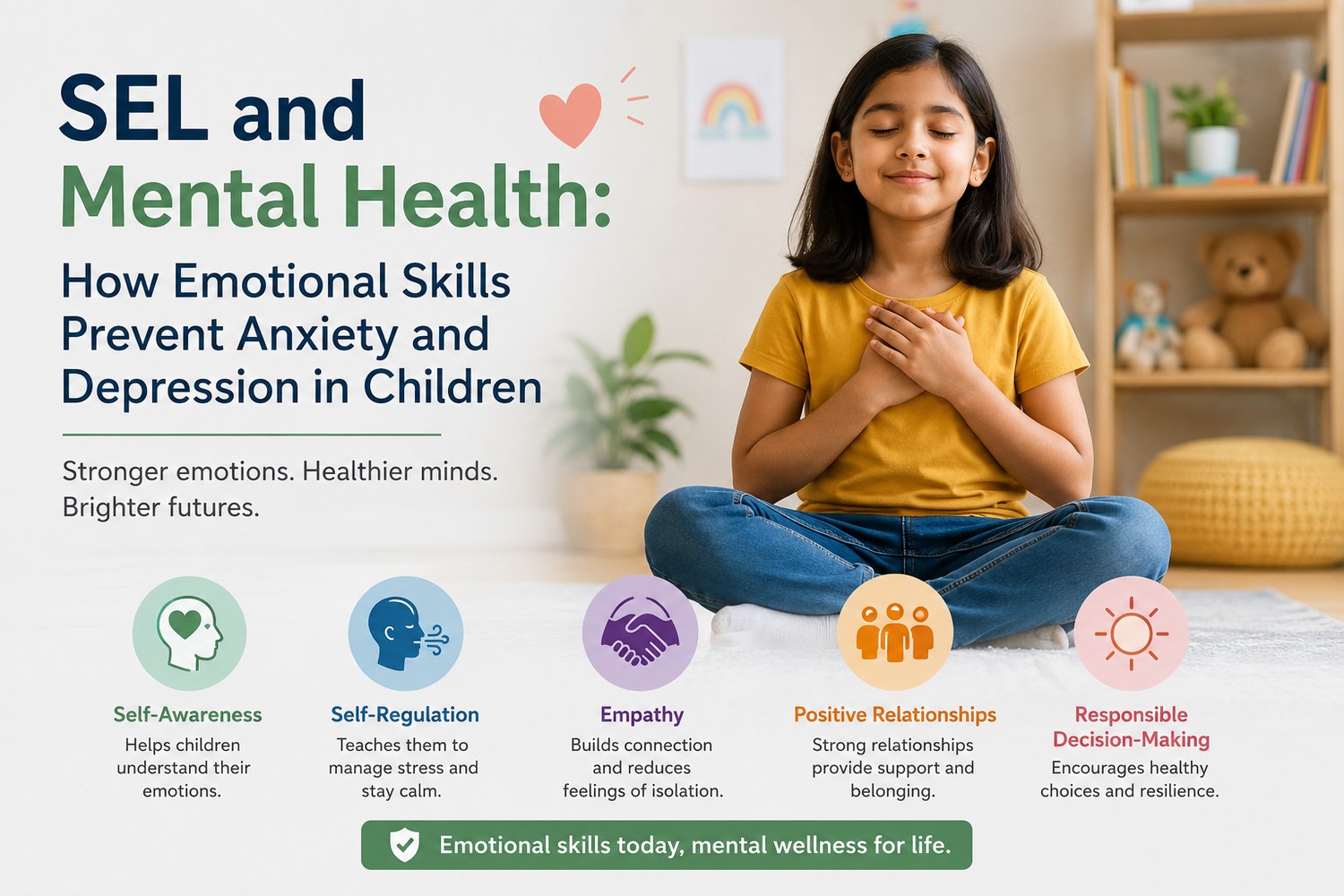
SEL and Mental Health: How Emotional Skills Prevent Anxiety and Depression in Children SEL
SEL and Mental Health: How Emotional Skills Prevent Anxiety and Depression in Children
Read more
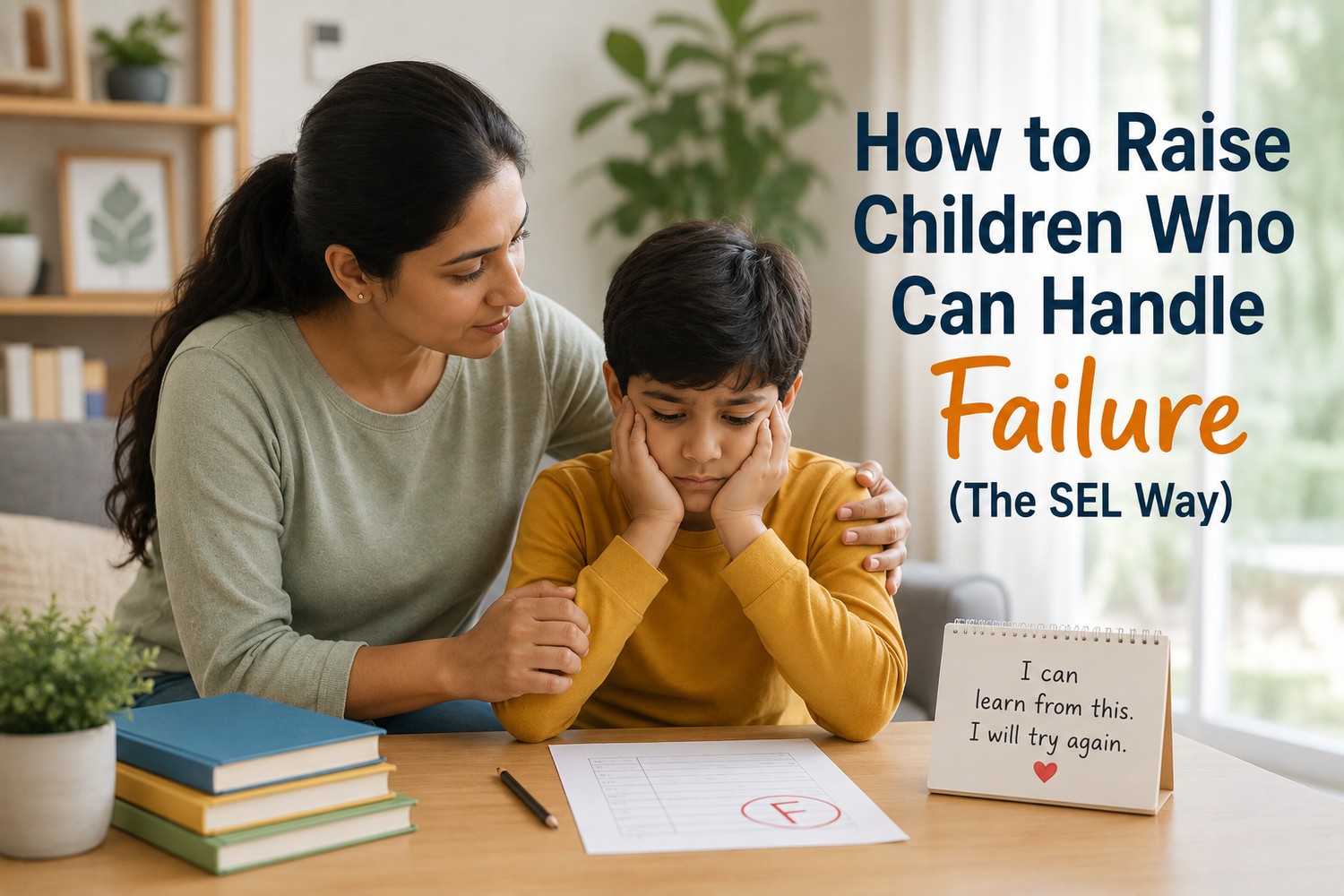
How to Raise Children Who Can Handle Failure (The SEL Way) SEL
How to Raise Children Who Can Handle Failure (The SEL Way)
Read more

Bullying and SEL: How Emotional Skills Protect Children (From Both Sides) SEL
Bullying and SEL: How Emotional Skills Protect Children (From Both Sides)
Read more

Gratitude Practices for Children: Why and How to Start Today SEL
Gratitude Practices for Children: Why and How to Start Today
Read more

How to Handle a Highly Sensitive Child: What Parents Get Wrong SEL
How to Handle a Highly Sensitive Child: What Parents Get Wrong
Read more
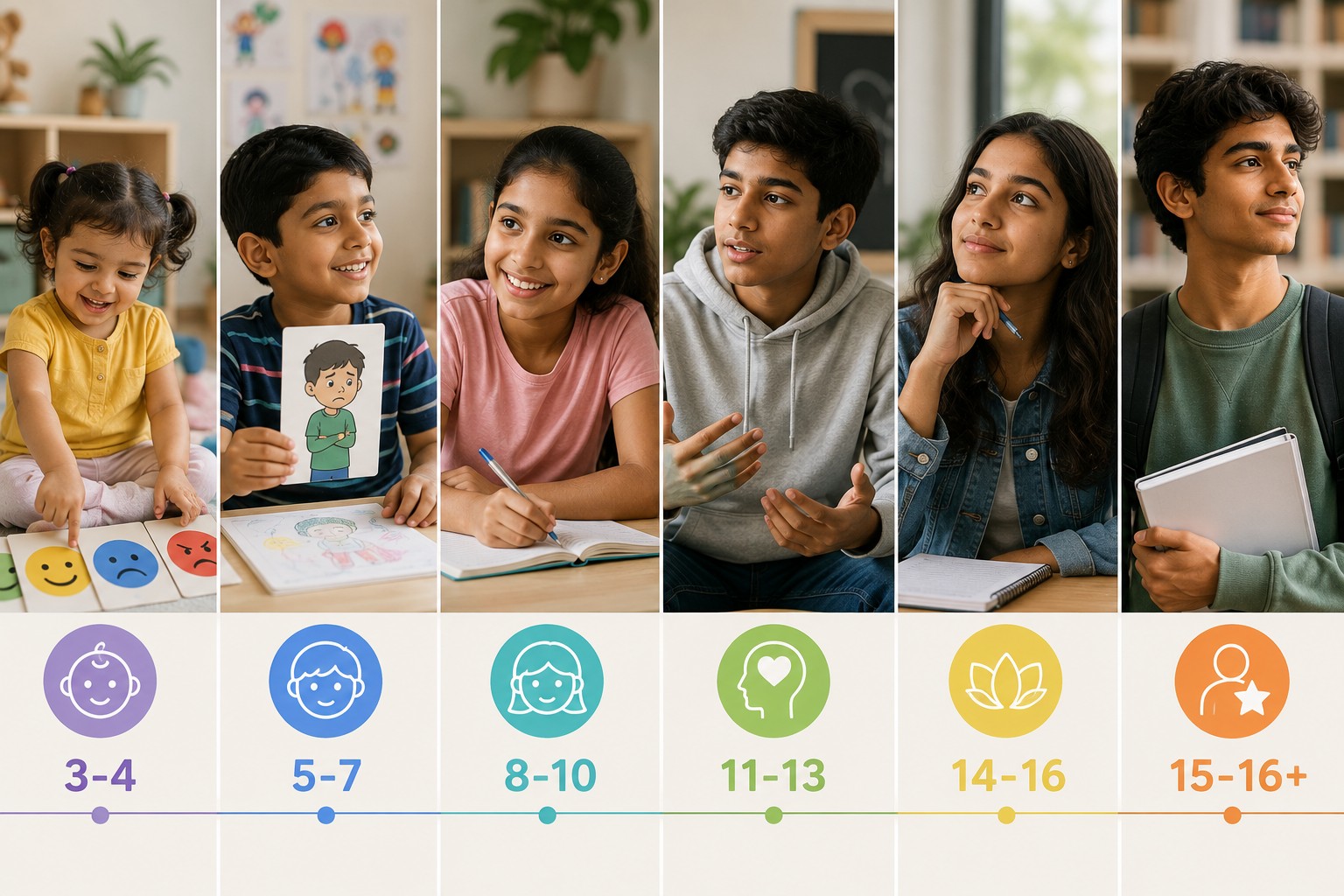
Teaching Children About Emotions: An Age-by-Age Guide from 3 to 16 SEL
Teaching Children About Emotions: An Age-by-Age Guide from 3 to 16
Read more
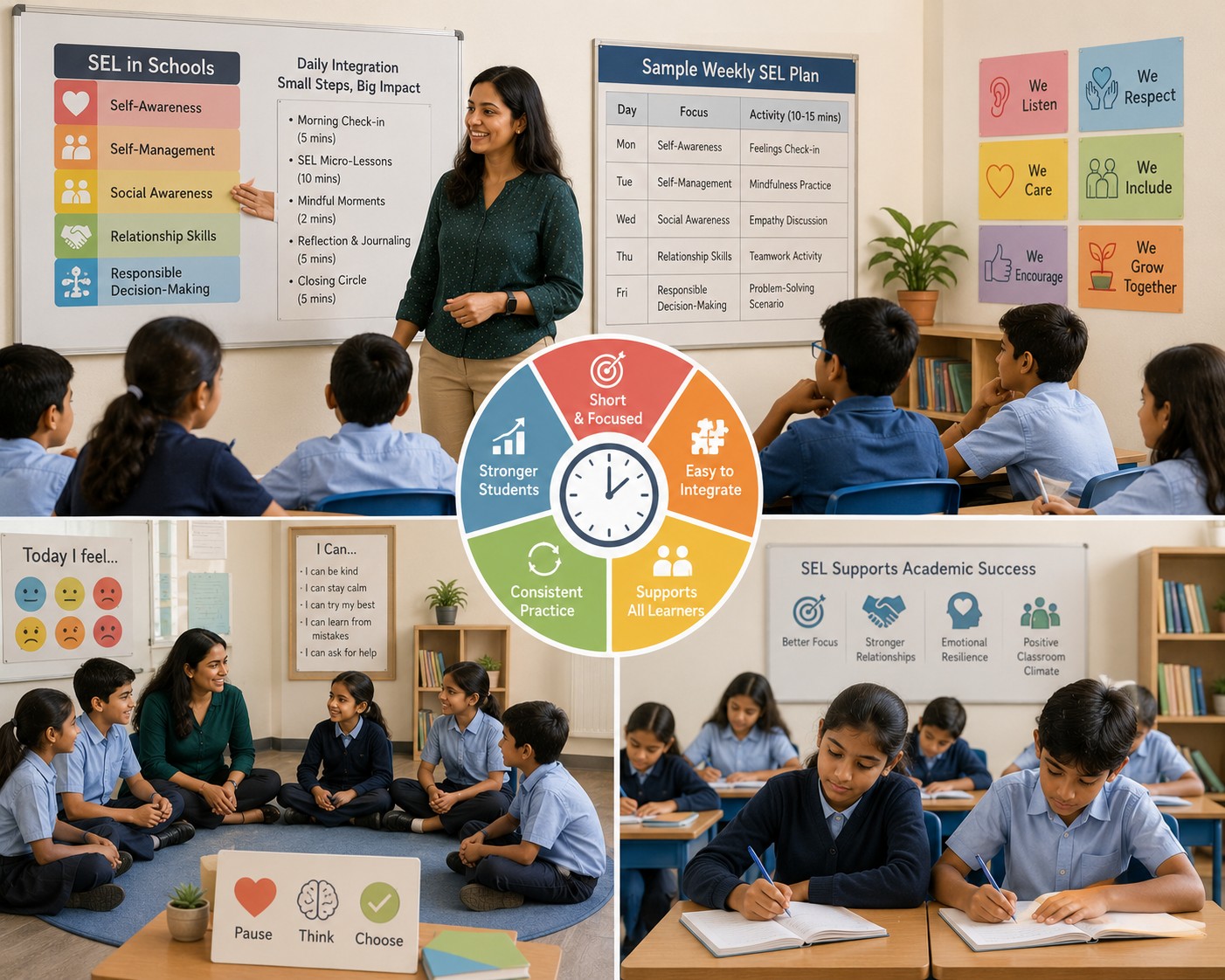
How Schools Can Implement SEL Without Disrupting the Academic Calendar SEL
How Schools Can Implement SEL Without Disrupting the Academic Calendar
Read more
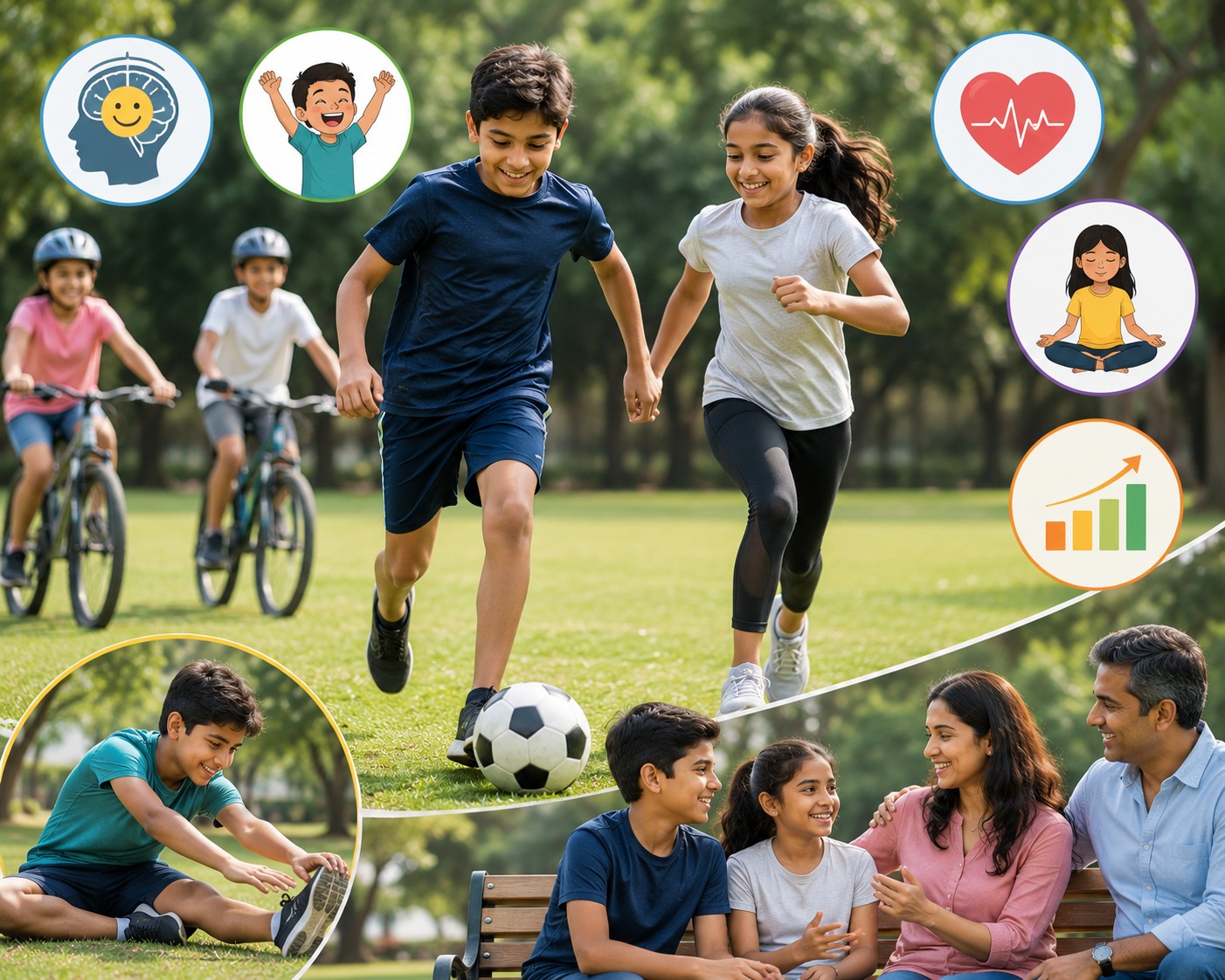
The Link Between Physical Activity and Emotional Health in Children: What Parents Must Know SEL
The Link Between Physical Activity and Emotional Health in Children: What Parents Must Know
Read more
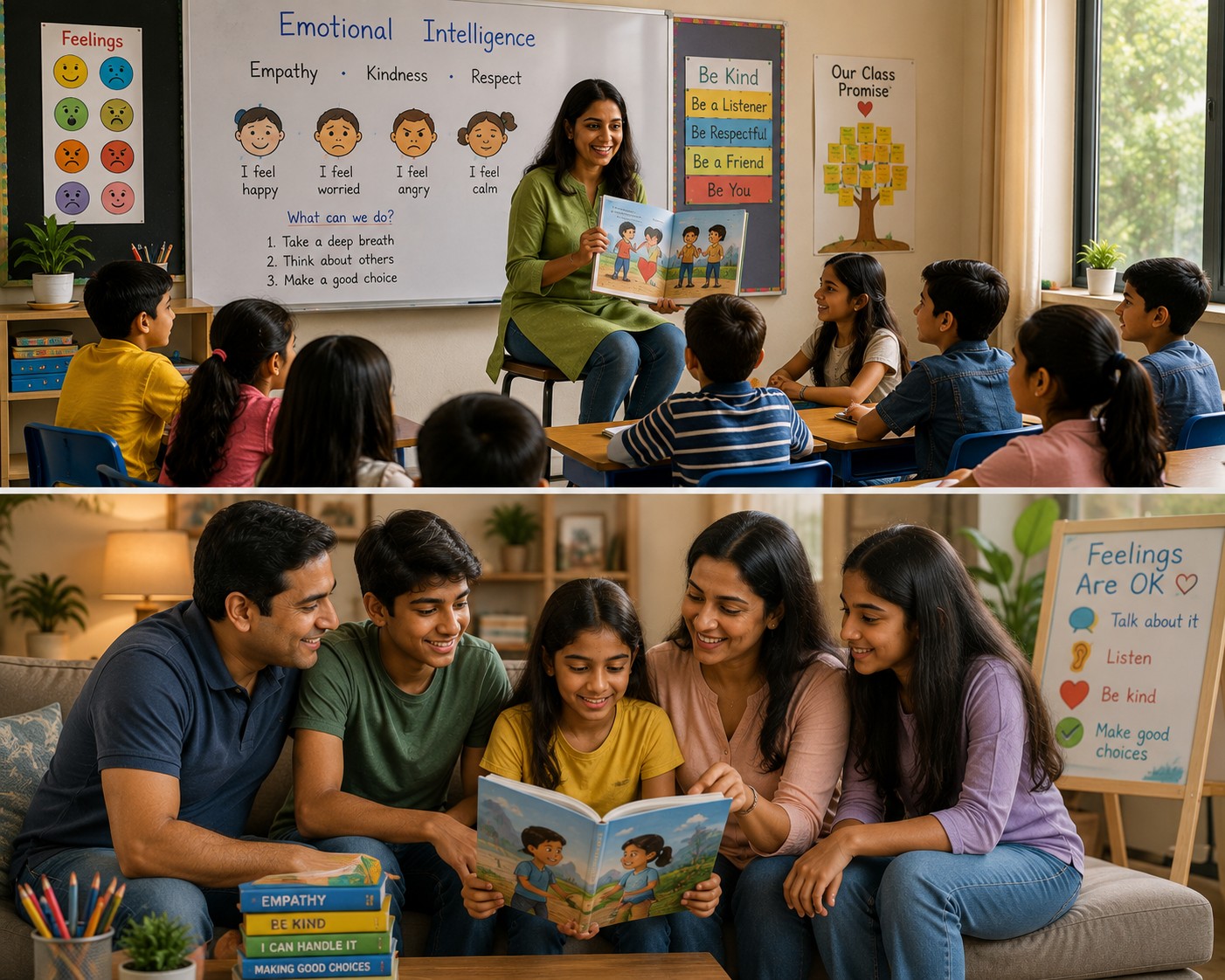
How to Use Storytelling to Teach Emotional Intelligence to Kids SEL
How to Use Storytelling to Teach Emotional Intelligence to Kids
Read more

Responsible Decision-Making: Teaching Children to Think Before They Act SEL
Responsible Decision-Making: Teaching Children to Think Before They Act
Read more

What Happens to Children Who Don't Learn SEL Skills: The Long-Term Evidence SEL
What Happens to Children Who Don't Learn SEL Skills: The Long-Term Evidence
Read more

Screen Time and Emotional Intelligence: What Research Says (And What to Do About It) SEL
Screen Time and Emotional Intelligence: What Research Says (And What to Do About It)
Read more

How Teachers Can Build Emotionally Safe Classrooms: A Practical Handbook SEL
How Teachers Can Build Emotionally Safe Classrooms: A Practical Handbook
Read more

Mindfulness for Children: The Science, the Skepticism, and What Actually Works SEL
Mindfulness for Children: The Science, the Skepticism, and What Actually Works
Read more

Friendship Skills for Children: How to Help Your Child Make and Keep Real Friends SEL
Friendship Skills for Children: How to Help Your Child Make and Keep Real Friends
Read more

What Is a Growth Mindset — And Why Every Indian Child Desperately Needs One SEL
What Is a Growth Mindset — And Why Every Indian Child Desperately Needs One
Read more

SEL for Teenagers: Why Adolescence Is the Most Critical Window (And How to Not Miss It) SEL
SEL for Teenagers: Why Adolescence Is the Most Critical Window (And How to Not Miss It)
Read more

How to Have Emotional Conversations With Your Child (Without Shutting Them Down) SEL
How to Have Emotional Conversations With Your Child (Without Shutting Them Down)
Read more

Building Resilience in Children: 12 Evidence-Based Strategies for Parents and Teachers SEL
Building Resilience in Children: 12 Evidence-Based Strategies for Parents and Teachers
Read more
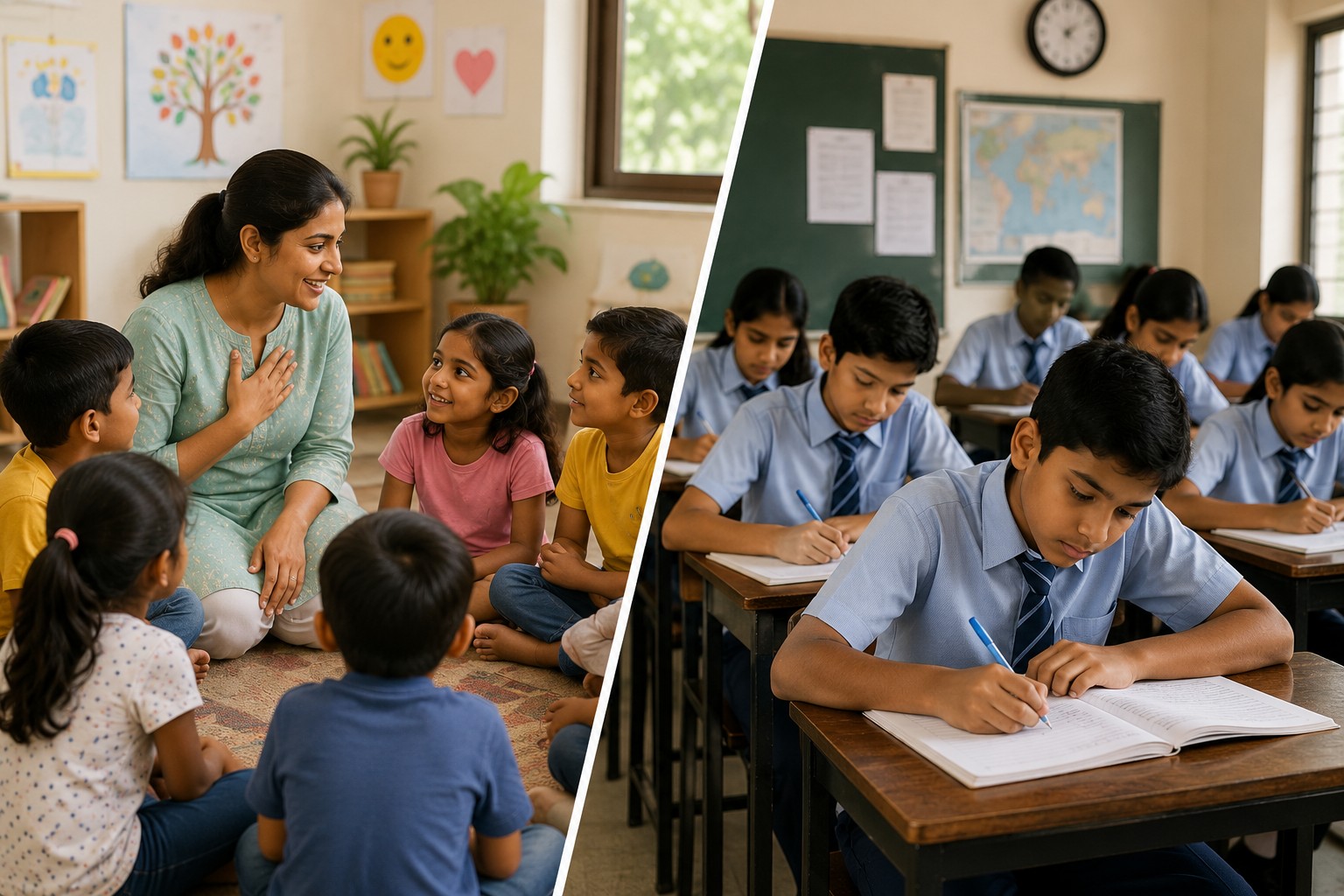
Social Emotional Learning vs Traditional Education: Why India Needs Both Right Now SEL
Social Emotional Learning vs Traditional Education: Why India Needs Both Right Now
Read more
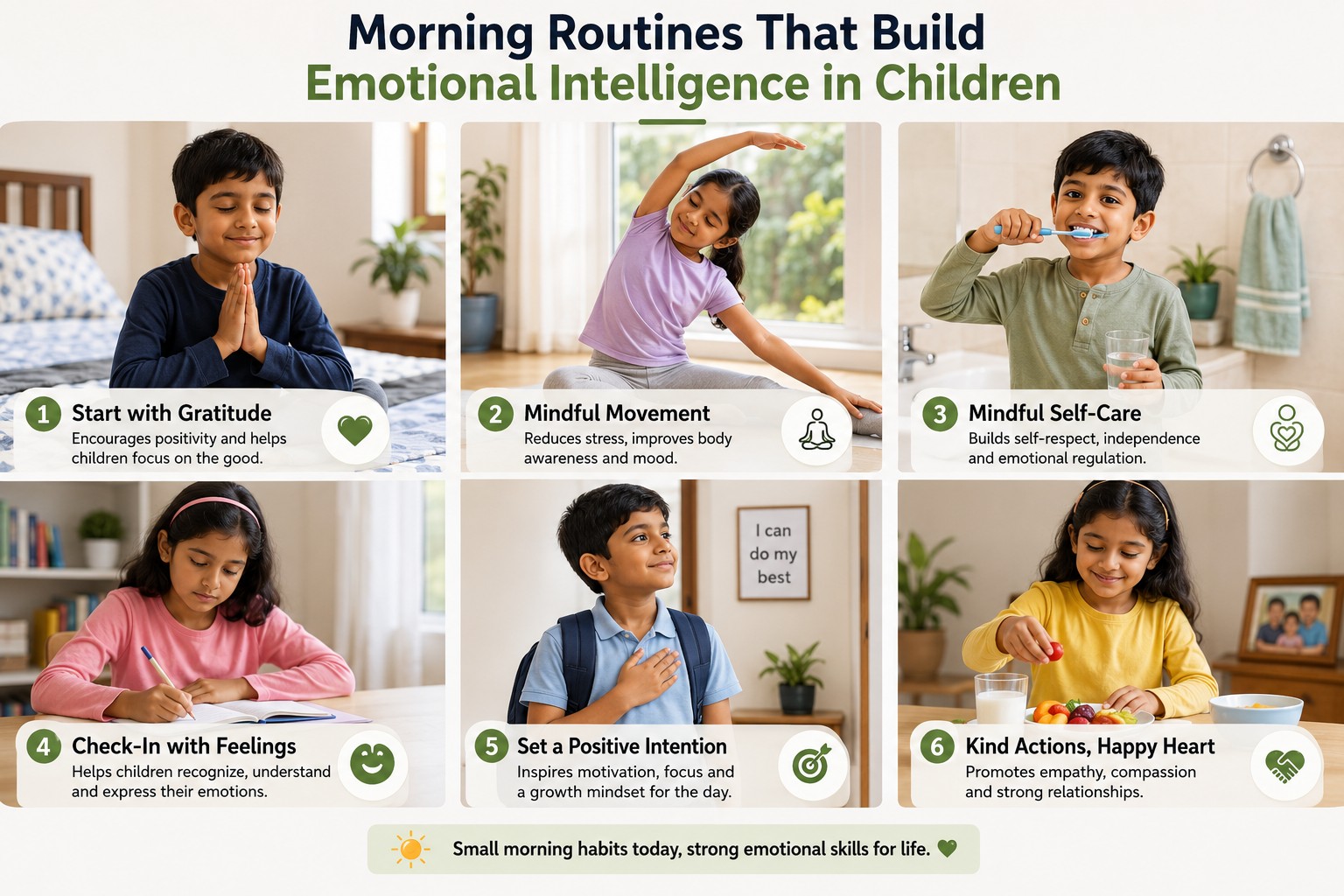
Morning Routines That Build Emotional Intelligence in Children (15-Minute Blueprint) SEL
Morning Routines That Build Emotional Intelligence in Children (15-Minute Blueprint)
Read more
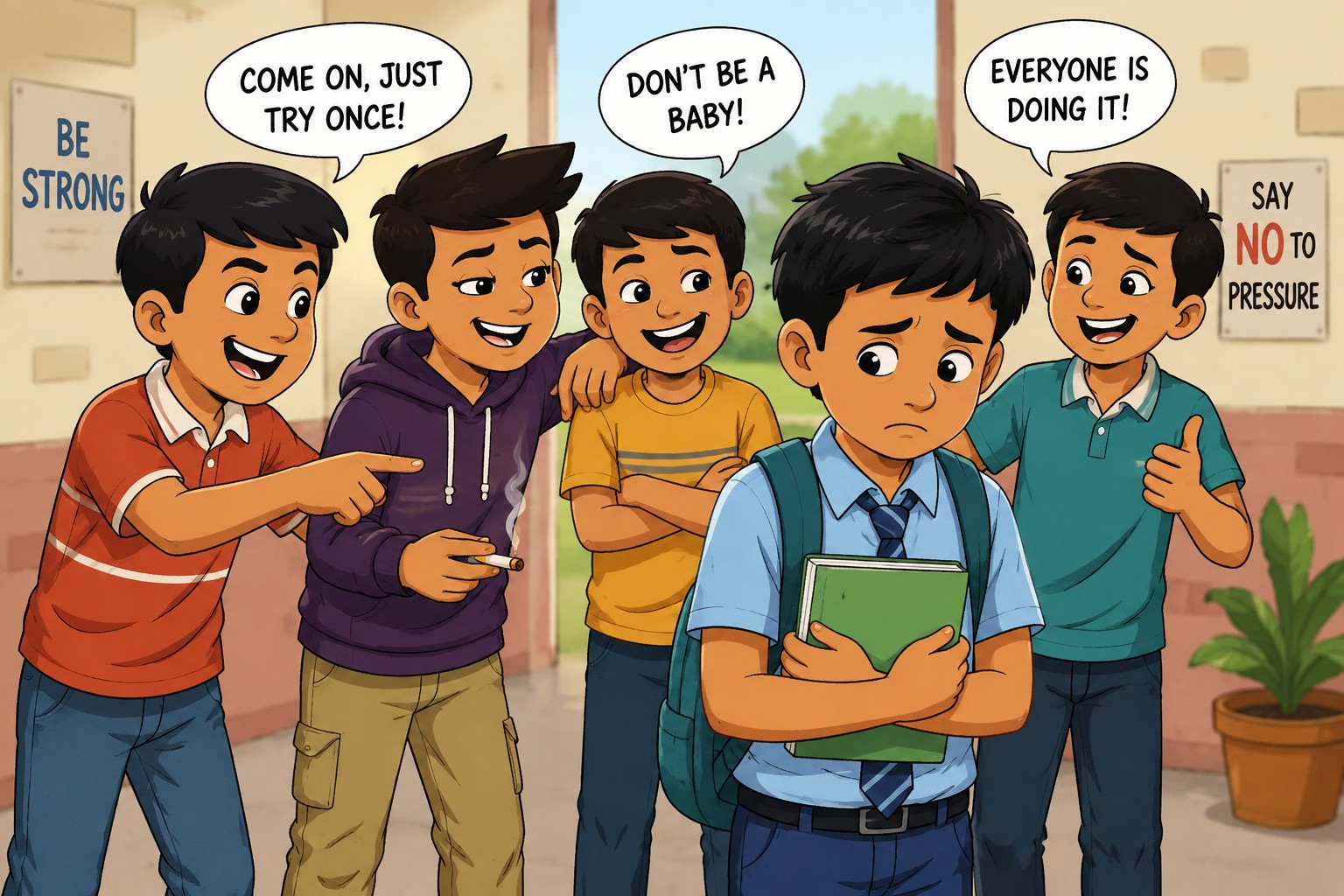
Peer Pressure and Your Teenager: What SEL Research Says (And What Actually Helps) SEL
Peer Pressure and Your Teenager: What SEL Research Says (And What Actually Helps)
Read more

What Is Empathy and How Do You Teach It to Children? SEL
What Is Empathy and How Do You Teach It to Children?
Read more

Teaching Kids to Manage Anger: The Complete Parent's Playbook SEL
Teaching Kids to Manage Anger: The Complete Parent's Playbook
Read more
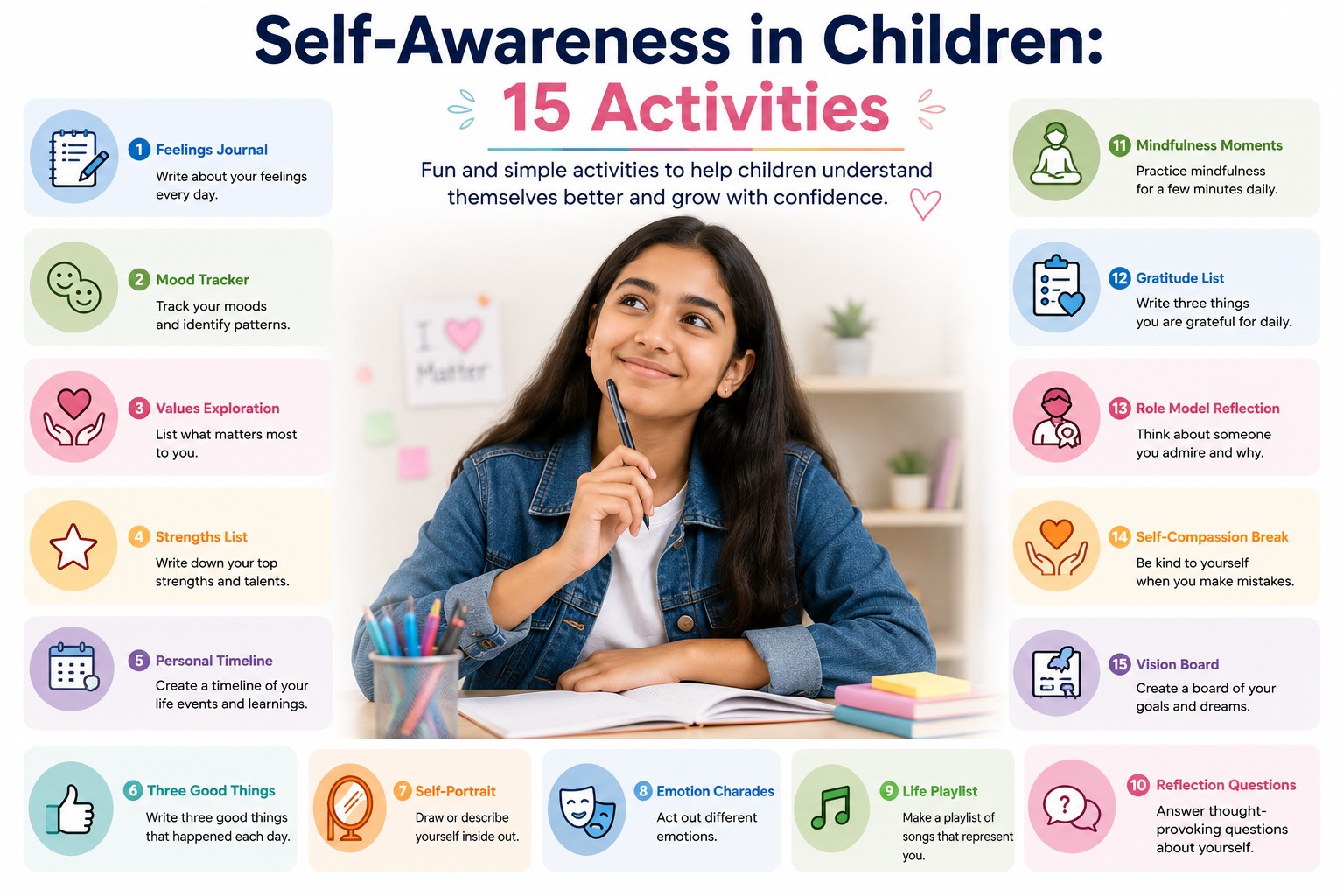
Self-Awareness in Children: 15 Activities That Actually Work (Age 6–16) SEL
Self-Awareness in Children: 15 Activities That Actually Work (Age 6–16)
Read more
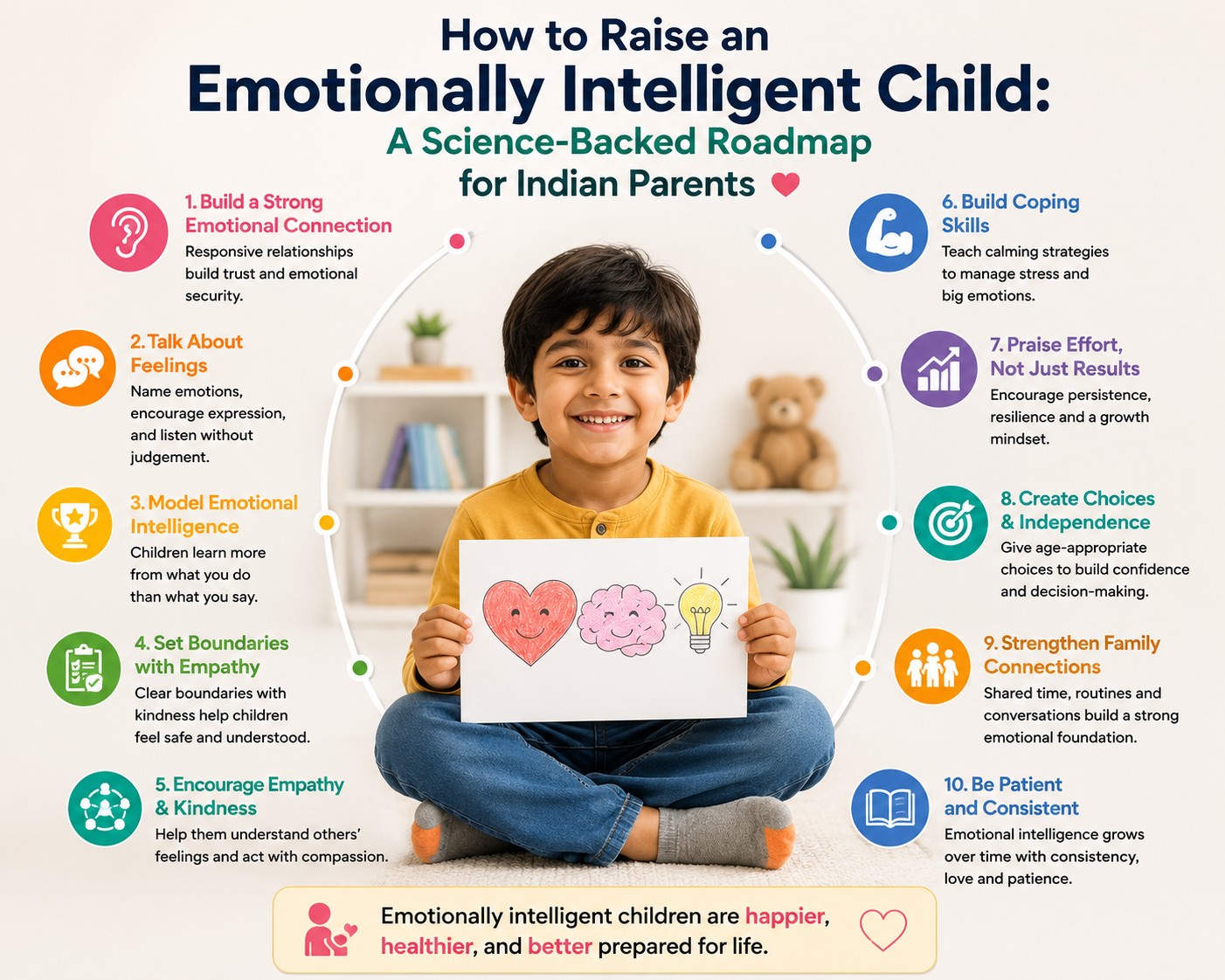
How to Raise an Emotionally Intelligent Child: A Science-Backed Roadmap for Indian Parents SEL
How to Raise an Emotionally Intelligent Child: A Science-Backed Roadmap for Indian Parents
Read more
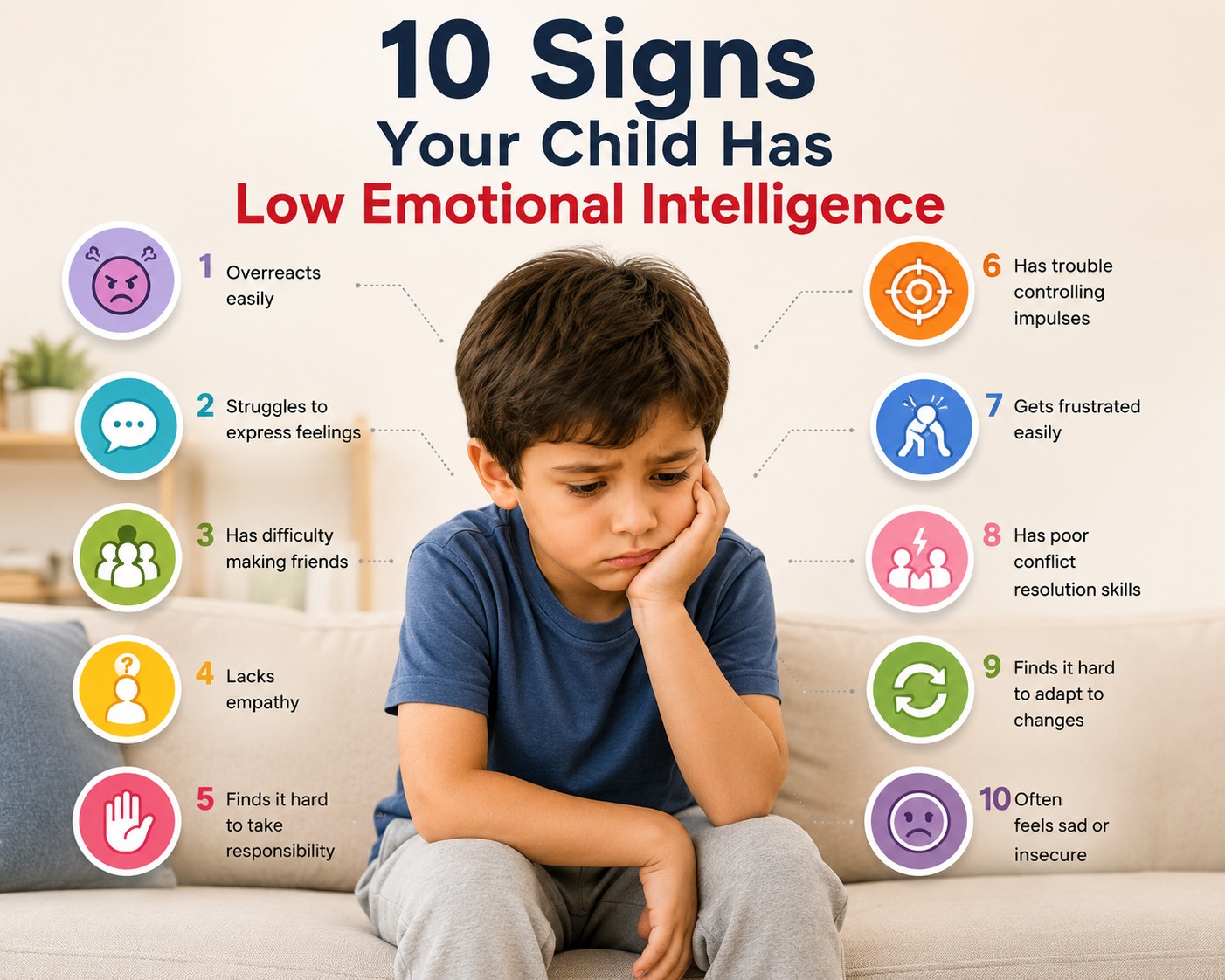
10 Signs Your Child Has Low Emotional Intelligence (And What To Do About It) SEL
10 Signs Your Child Has Low Emotional Intelligence (And What To Do About It)
Read more
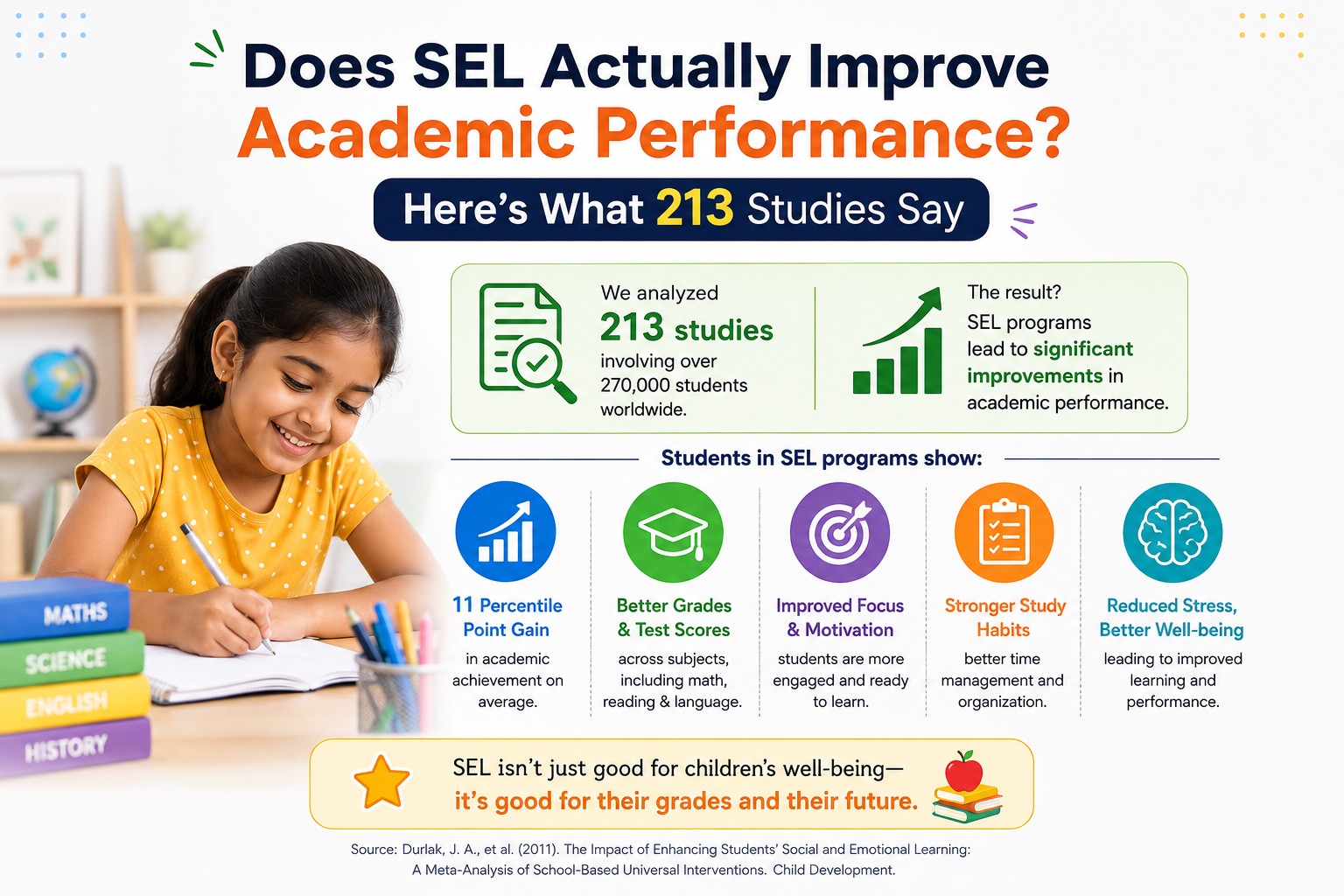
Does SEL Actually Improve Academic Performance? Here's What 213 Studies Say SEL
Does SEL Actually Improve Academic Performance? Here's What 213 Studies Say
Read more
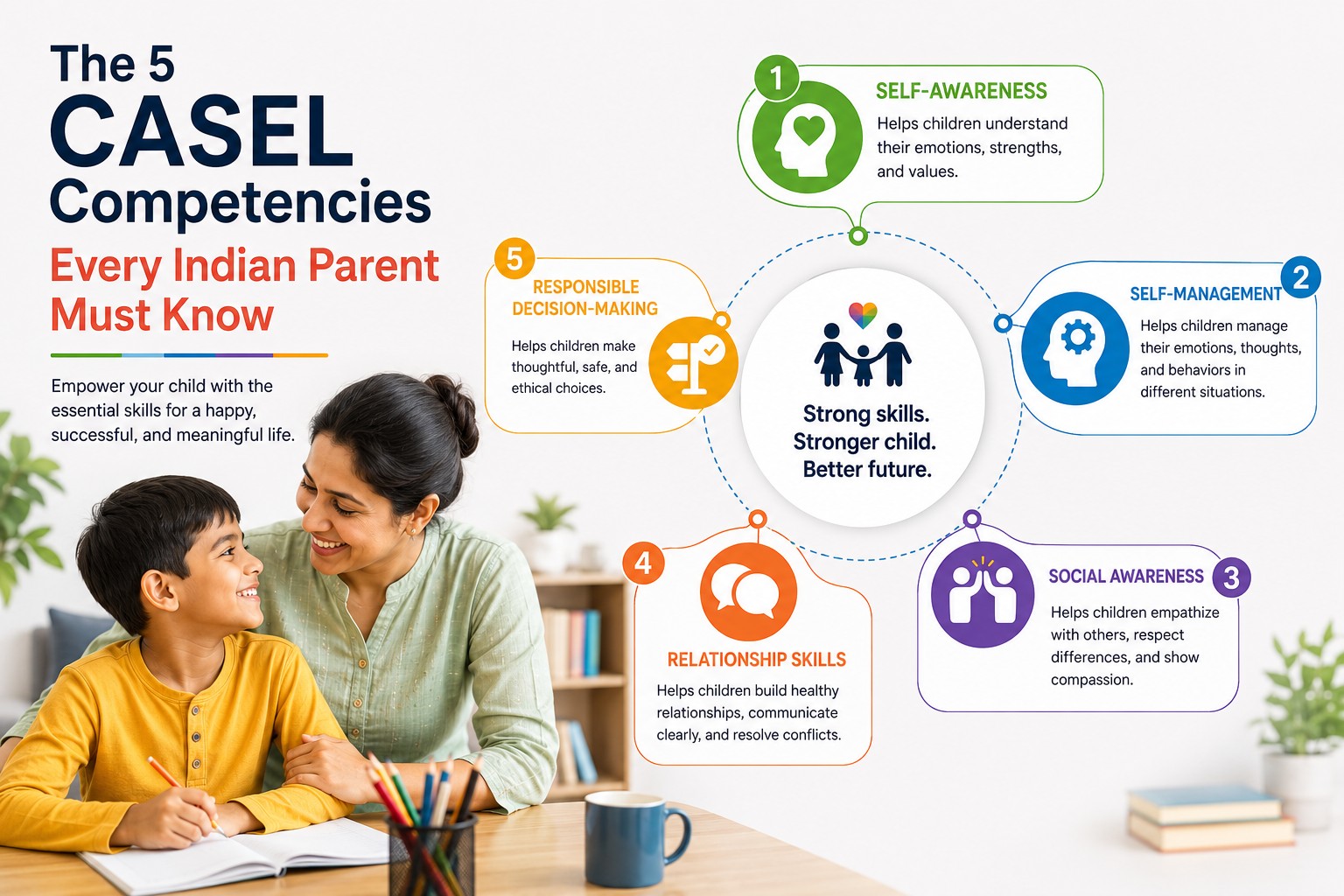
The 5 CASEL Competencies Every Indian Parent Must Know SEL
The 5 CASEL Competencies Every Indian Parent Must Know
Read more
Child Emotional Meltdowns: Why They're a Learning Opportunity (Not a Discipline Problem) SEL
Child Emotional Meltdowns: Why They're a Learning Opportunity (Not a Discipline Problem)
Read more

What Is Social Emotional Learning? Here's Everything You Need to Know SEL
What Is Social Emotional Learning? Here's Everything You Need to Know
Read more

The Parent Emotional Intelligence Guide SEL
The Parent Emotional Intelligence Guide
Read more
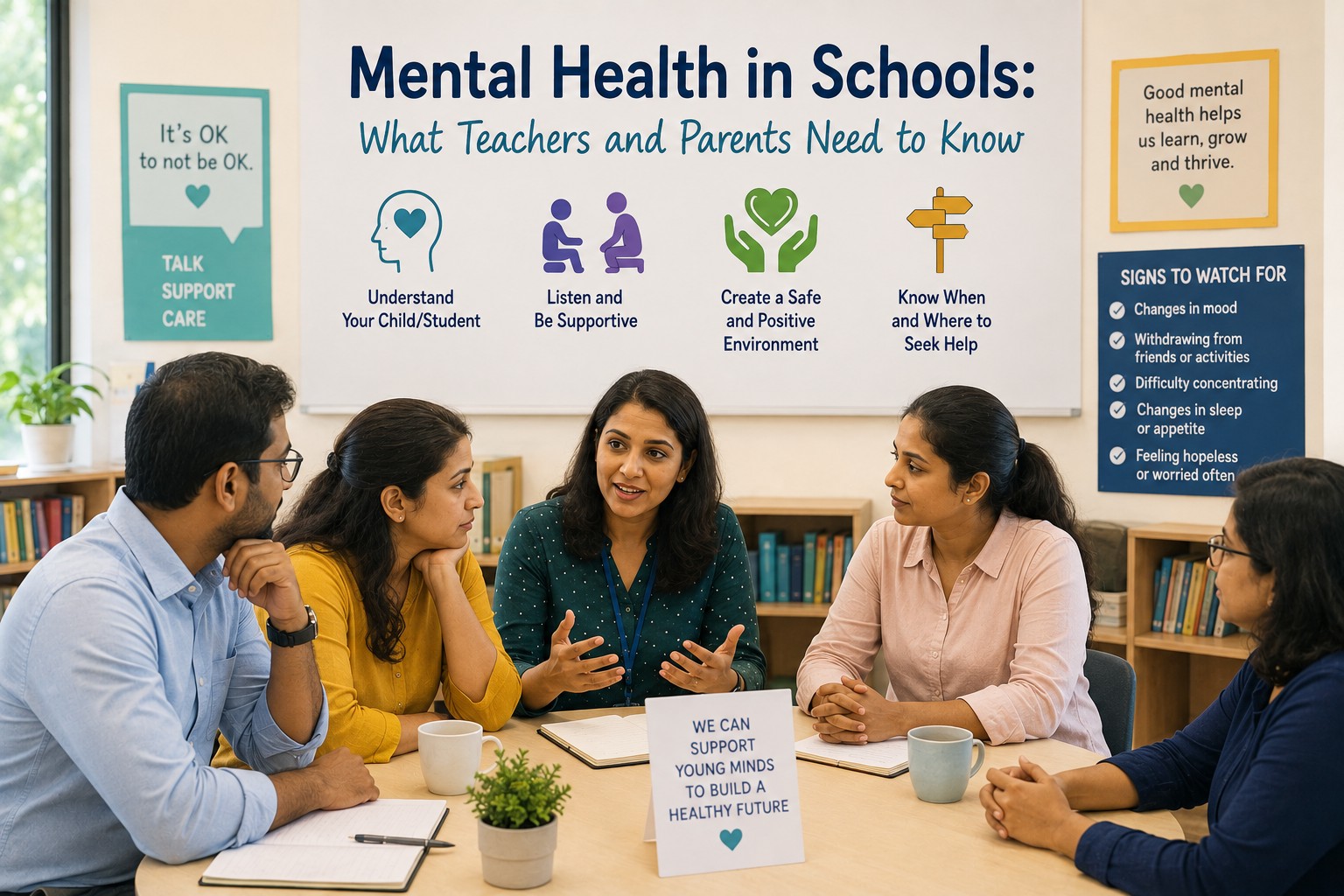
Mental Health in Schools: What Teachers and Parents Need to Know SEL
Mental Health in Schools: What Teachers and Parents Need to Know
Read more
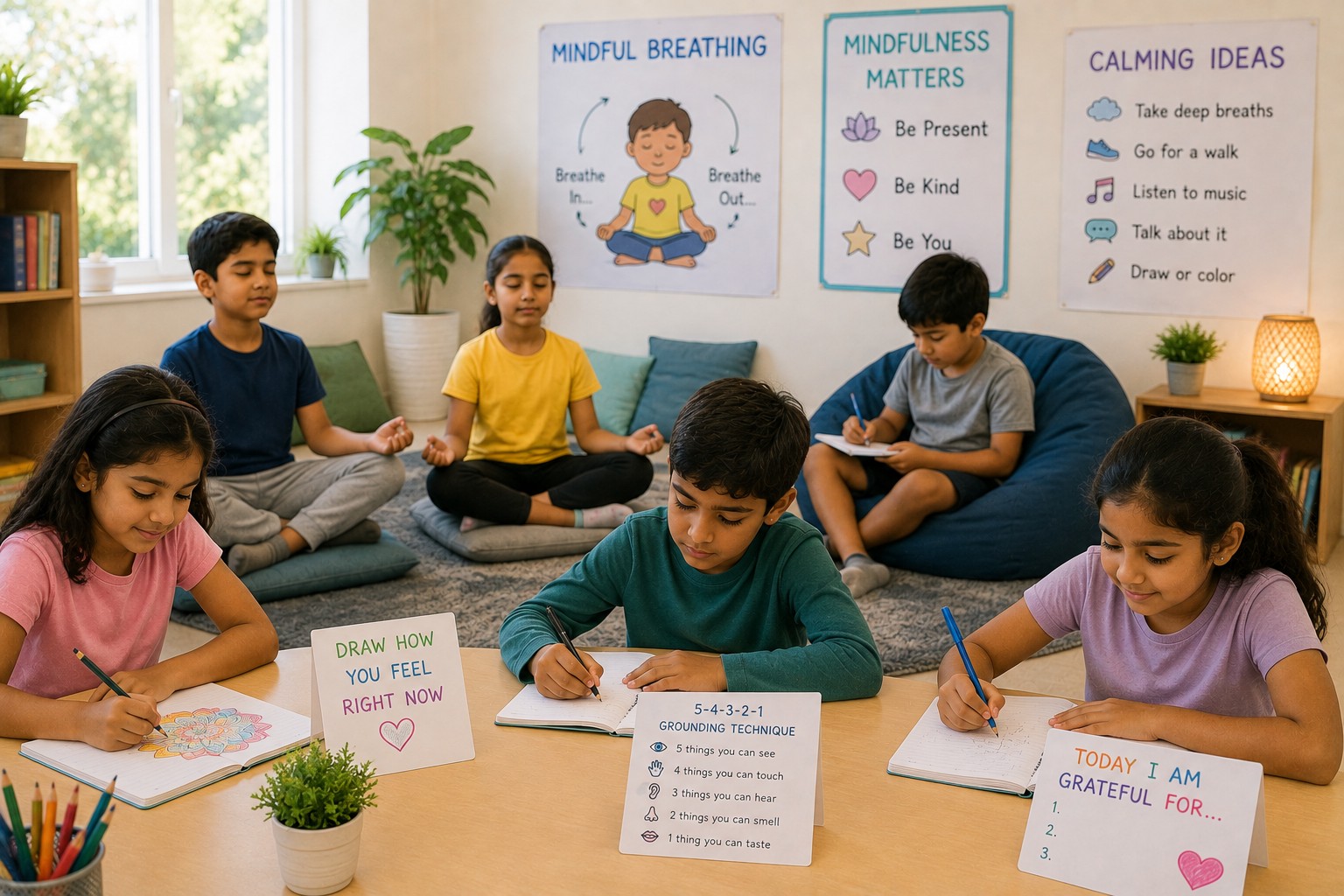
Mindfulness for Children: A Guide for Parents and Teachers (+10 Activities) SEL
Mindfulness for Children: A Guide for Parents and Teachers (+10 Activities)
Read more
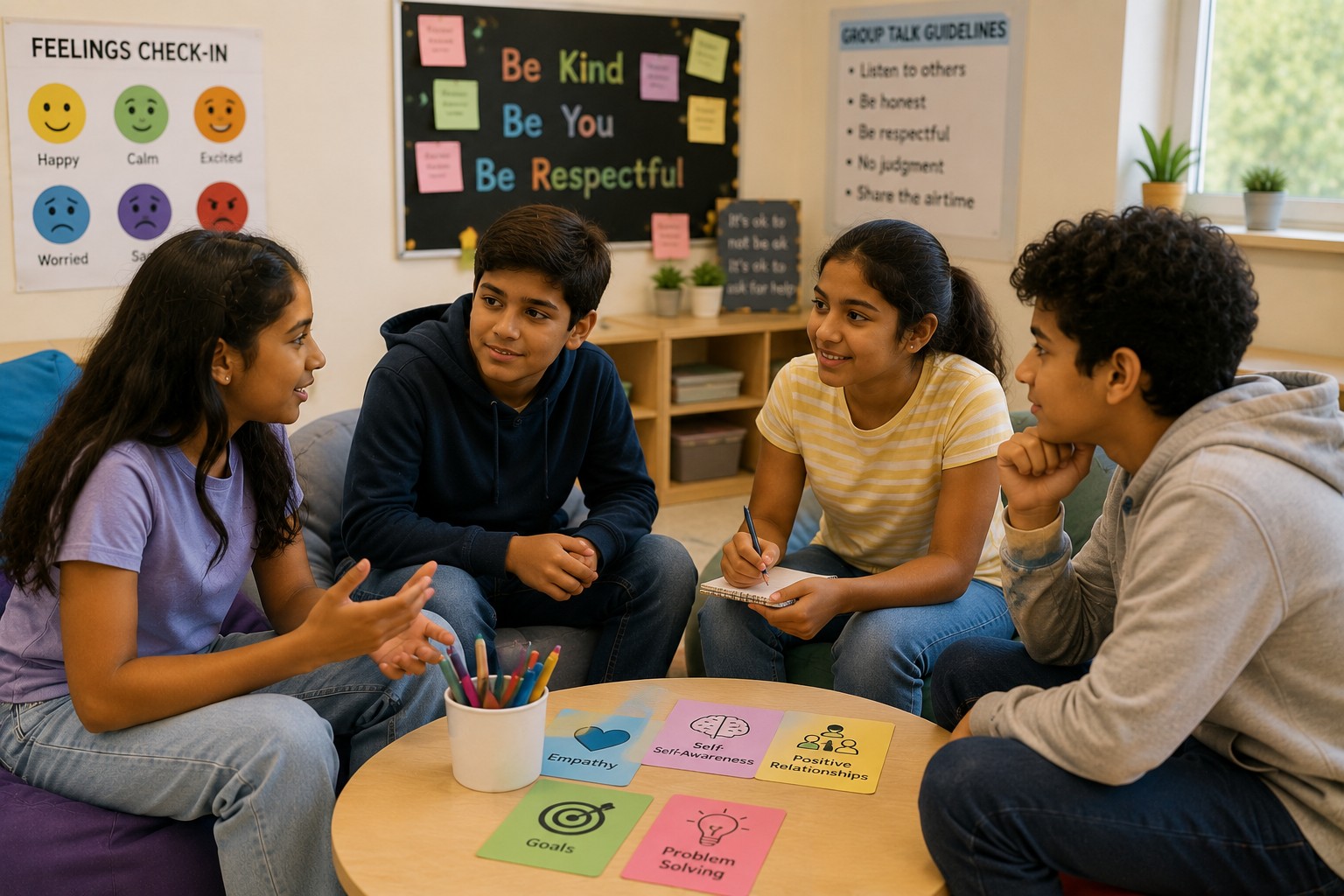
10 Emotional Intelligence Activities for Kids (That Actually Work) SEL
10 Emotional Intelligence Activities for Kids (That Actually Work)
Read more
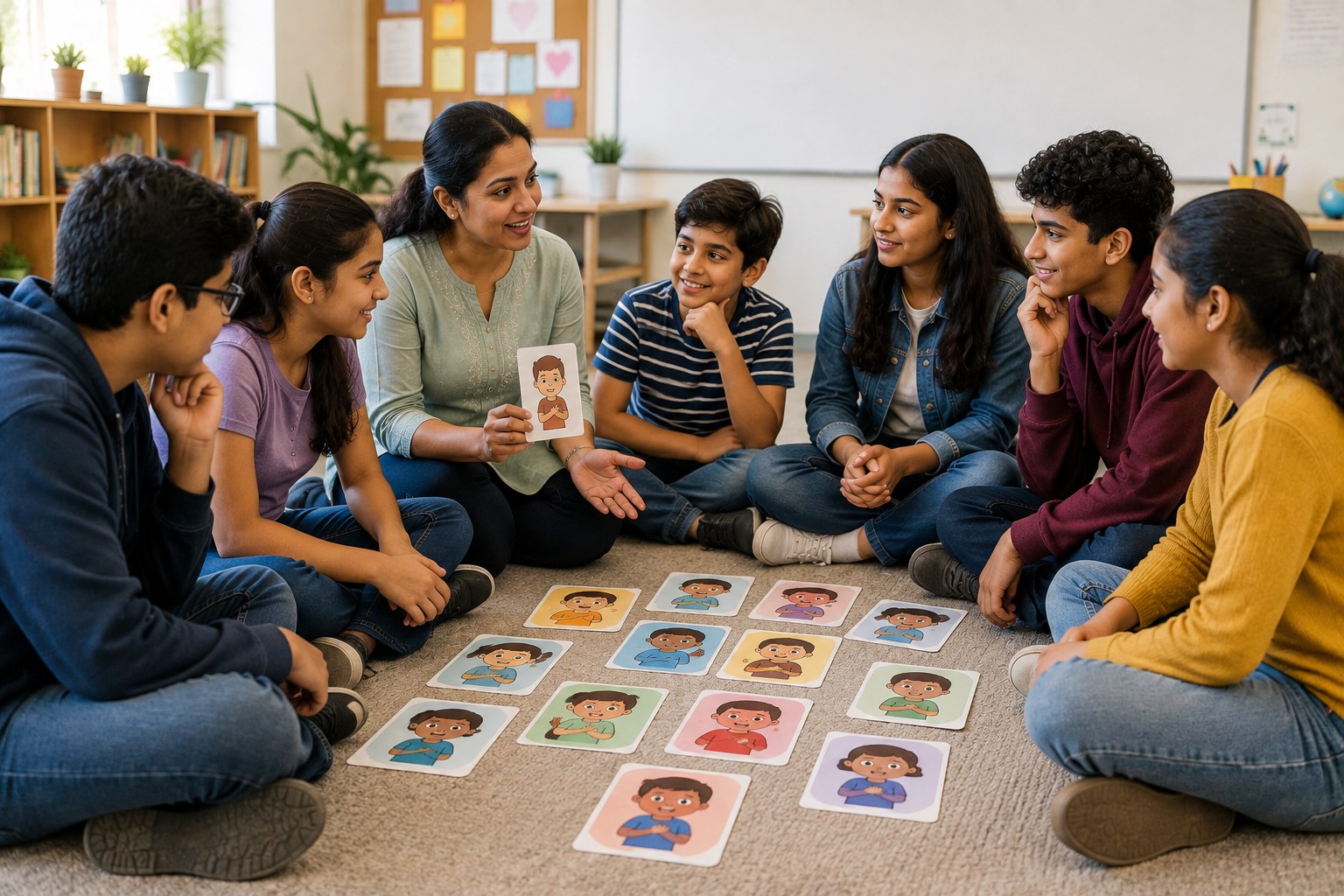
Classroom Behaviour Strategies That Actually Work SEL
Classroom Behaviour Strategies That Actually Work
Read more
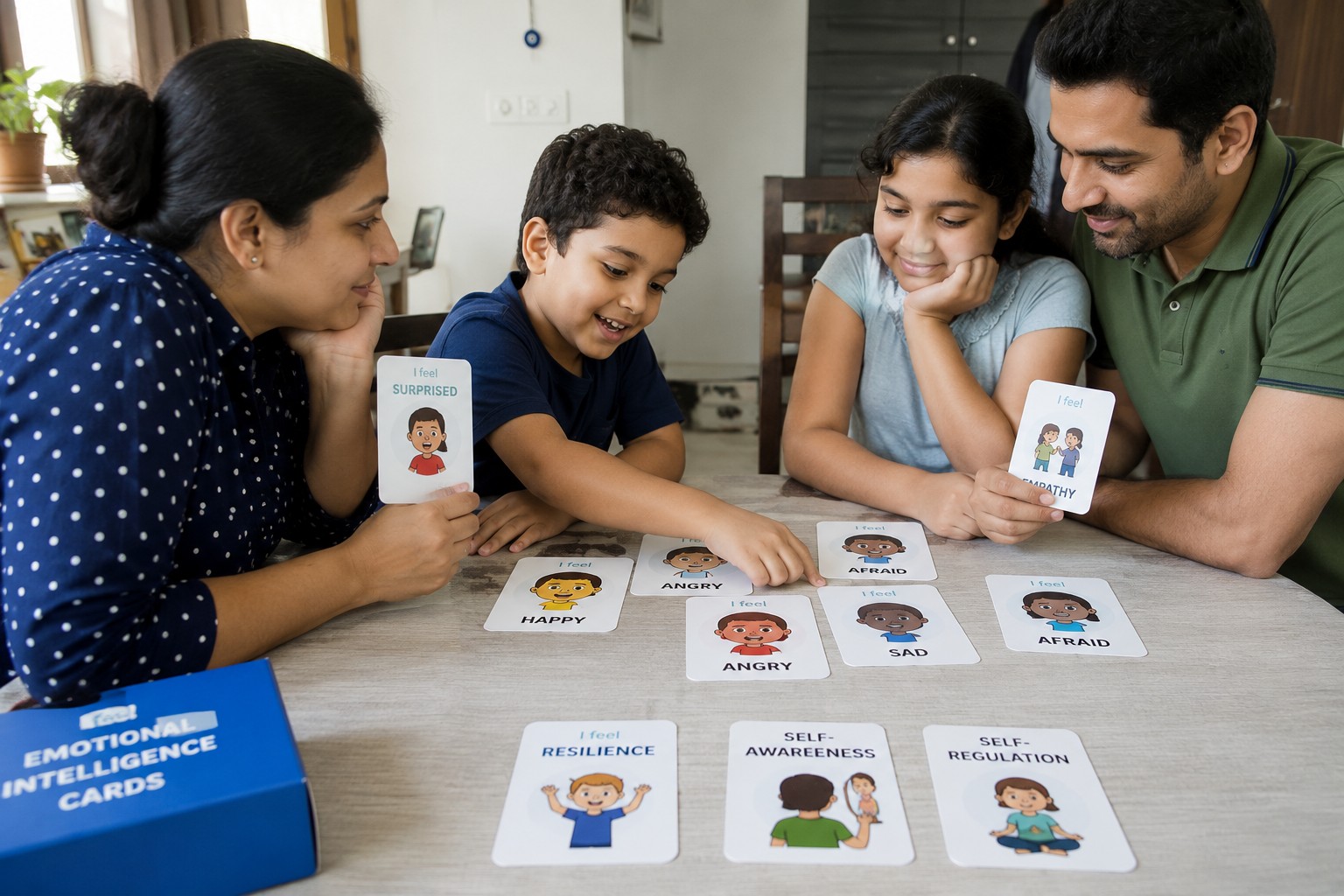
What Is Emotional Intelligence in Children? A Guide for Parents and Teachers SEL
What Is Emotional Intelligence in Children? A Guide for Parents and Teachers
Read more
What Is Social Emotional Learning? The Complete Guide Indian Parents Actually Need SEL
What Is Social Emotional Learning? The Complete Guide Indian Parents Actually Need
Read more