Relationship researcher John Gottman spent years observing couples in ordinary, unremarkable moments — a comment about a bird outside the window, a sigh from the next room, a quiet "listen to this." Six years later, he followed up. Couples who were still happily together had responded to these small, easy-to-miss moments roughly 86% of the time. Couples who had divorced had responded roughly 33% of the time.
That gap — 86% versus 33% — wasn't about big fights, shared values, or grand romantic gestures. It was about whether small, everyday attempts at connection got noticed or missed. Gottman called these attempts bids for connection, and while his original research measured married couples, the concept applies with striking accuracy to the parent-child relationship — arguably even more so, since a young child makes far more of these small bids across an ordinary day than an adult partner ever does.
What a "Bid for Connection" Actually Looks Like
A bid, in Gottman's framework, is any attempt — verbal or not — to get attention, affection, or acceptance. Not every bid looks like an obvious request. Most are small, almost disposable on their own: "Look at this drawing." A child holding up a toy without saying anything. A sigh loud enough to be noticed. A hand reaching for yours during a quiet moment.
According to this research, there are three ways to respond to a bid:
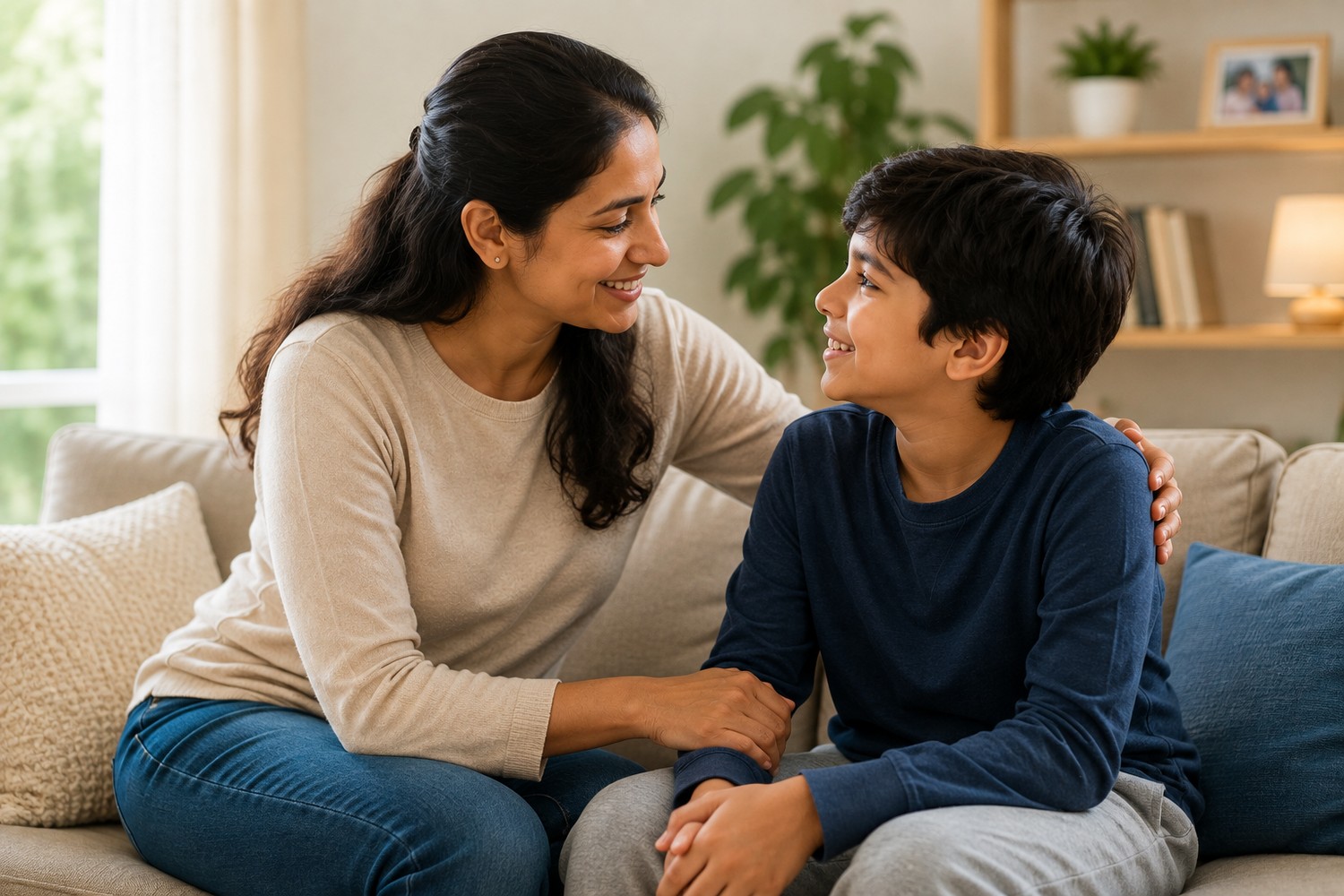
- Turning toward — acknowledging it, even briefly. A glance up, a genuine "oh, cool, tell me about it," a hand held back.
- Turning away — missing it, whether from distraction, being on a phone, or simply not registering it as a bid at all.
- Turning against — an irritated or dismissive response: "not now," a sigh, a flash of impatience.
Here's the finding worth internalizing: the content of any single bid rarely matters. The pattern of response, repeated across hundreds of ordinary moments, is what actually shapes the relationship.
Why This Matters More With Children Than With Anyone Else
A young child makes an enormous number of bids across a single day — far more than a spouse or a friend typically would. Most parents miss a meaningful share of them, not from lack of love, but because so many bids are small, easy to overlook amid the genuine logistics of a busy day. A phone glanced at during a child's sentence. A "just a second" that becomes five minutes. None of these individually damage anything.
What matters is the accumulated pattern, not any single missed moment. Gottman's own research emphasizes this directly: relationships aren't damaged by occasional missed bids — they're damaged when turning away or turning against becomes the norm, the thing a child comes to expect rather than the exception.
This reframes a lot of parenting guilt in a useful way. You don't need to catch every single bid your child makes. You need turning toward to be the dominant pattern, not a perfect one.
The Connection to Attachment Security
This pattern connects directly to a much older and deeply established body of research: attachment theory, originating with psychiatrist John Bowlby and developmental psychologist Mary Ainsworth. Their foundational research found that children who experience consistent, responsive caregiving develop what's called secure attachment — a stable internal sense that their needs will generally be met, which in turn supports emotional regulation, confidence in exploring the world, and healthier relationships later in life.
Gottman's bids-for-connection research offers something attachment theory's original studies didn't fully specify: the actual mechanism, playing out in the small, ordinary moments of daily life. A secure attachment isn't built through occasional big gestures — vacations, elaborate celebrations, grand declarations of love. It's built, moment by moment, through the accumulated pattern of turning toward the thousands of small bids a child makes across ordinary days.
What Turning Toward Actually Looks Like in Practice
It doesn't require dropping everything. Gottman's own research emphasizes "good enough" responsiveness, not constant, flawless attunement. A brief acknowledgment — "I hear you, give me one second and I'm all yours" — counts as turning toward, even when you genuinely can't stop what you're doing immediately.
It requires noticing bids that don't look like requests. A child silently placing a drawing near you, without a word, is still a bid. Learning to recognize the quiet, non-verbal versions matters as much as responding well to the obvious ones.
Repair matters more than perfection. You will miss bids — everyone does. What predicts the relationship's health isn't the miss itself, but whether you notice afterward and circle back: "I was distracted earlier when you showed me that — can you show me again?"
Small and frequent beats occasional and grand. A five-second acknowledgment, repeated dozens of times across a day, builds more relational security than one elaborate weekly "quality time" outing that lets the other six days run on turning away.
What to Do This Week
- For one day, simply notice how often you catch a bid versus miss one — no need to change anything yet, just build awareness of your own current pattern.
- Practice the brief acknowledgment when you genuinely can't stop what you're doing: "I hear you, one second" turns away far less than silence does, even when you can't respond fully in the moment.
- When you notice you've missed a bid, circle back explicitly — "I was distracted before, tell me again" — rather than letting the miss simply pass without repair.
A strong parent-child relationship was never really built in the big, memorable moments alone. The research points somewhere quieter and more ordinary: the thousands of small, easy-to-miss bids that make up an average week — and whether, more often than not, you turned toward them.
Happy Sprout Action: Want to build the emotional attunement and connection skills this research points to, alongside your child's own growing emotional vocabulary? Register your child for a live Happy Sprout SEL class at happysproutminds.com — our facilitators help build the two-way emotional skills that strengthen family relationships, not just classroom ones.
Future Starts Within.