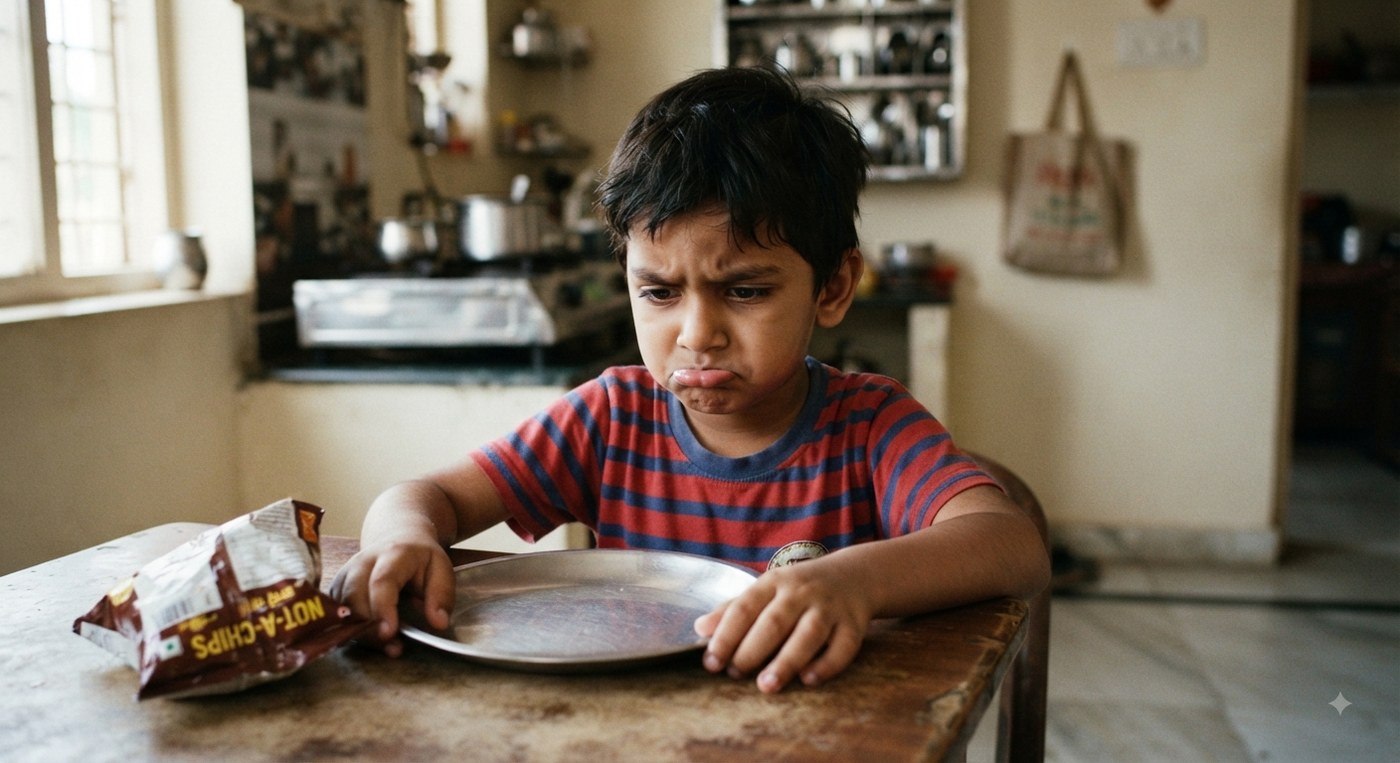
Your child doesn't get picked for the team. Isn't invited to the party everyone's talking about. Gets turned down by a friend they asked to hang out with. As a parent, the instinct is often to minimize it — "it's not a big deal," "there'll be other chances." Here's why that instinct, however well-meant, tends to miss what's actually happening: rejection isn't a minor inconvenience your child's brain is overreacting to. It's activating some of the same neural circuitry involved in processing physical pain.
Why Rejection Genuinely Hurts
Researcher Naomi Eisenberger and colleagues at UCLA ran a now-famous study using a virtual ball-tossing game called Cyberball — participants believed they were playing with two other real people online, who eventually stopped passing them the ball, simulating social exclusion. Brain scans during the exclusion phase showed increased activity in the dorsal anterior cingulate cortex and anterior insula — the same brain network heavily implicated in the distressing, unpleasant experience of physical pain — and this activity correlated directly with how much distress participants reported feeling.
This finding has since been replicated across dozens of studies and multiple meta-analyses. There's genuine, ongoing scientific debate about the precise interpretation — whether this reflects rejection specifically tapping into pain circuitry, or a broader distress-and-salience system that pain also happens to use — but the core, consistently replicated finding holds either way: rejection registers in the brain as something closer to a genuine injury than a simple disappointment.
This reframes "it's not a big deal" as actively unhelpful. To your child's nervous system, in that moment, it genuinely is a big deal — telling them otherwise can feel like their real experience is being dismissed, rather than comforted.
Why Some Kids Take Rejection Much Harder Than Others
Psychologist Geraldine Downey's research identified a specific, measurable trait she called rejection sensitivity — a tendency to anxiously expect, quickly perceive, and intensely overreact to rejection, even in genuinely ambiguous situations. Downey's research, including studies specifically with children in the 9-to-13 age range, found something worth understanding directly: rejection sensitivity tends to develop from repeated experiences of rejection, particularly from parents or close peers — and once it forms, it creates a kind of hair-trigger sensitivity that reads even neutral or ambiguous behavior from others as intentional rejection.
Here's the genuinely important part: rejection-sensitive children often behave in ways that increase the likelihood of the very rejection they fear — becoming defensive, hostile, or withdrawn in response to perceived slights, which can push peers away and create a self-fulfilling cycle. This isn't a character flaw. It's a learned processing pattern — which means, like any learned pattern, it can shift with different experiences and deliberate support.
Why the Pain Fades Faster Than Kids Expect
Here's genuinely useful, research-backed news: research on what psychologists call affective forecasting — how people predict their own future emotional states — has found a consistent pattern called the impact bias: people, across ages, reliably overestimate how intensely and how long a negative emotional event will affect them. A rejection that feels unbearable and permanent in the moment is, for most people, genuinely less intense and considerably shorter-lived than it feels while it's happening.
Teaching a child this specific finding directly — not just "it'll get better," but the actual research that our brains are bad at predicting how quickly bad feelings fade — gives them something more concrete to hold onto than vague reassurance. It's a real, teachable fact about how emotional prediction works, not just a comforting platitude.
What Actually Helps
Validate the pain's realness before trying to fix or minimize it. "That really hurts" acknowledges what the neuroscience confirms is a genuine, significant experience — not an overreaction to be talked down from.
Watch for rejection-sensitivity patterns forming, especially after a string of disappointments. If your child starts assuming rejection before it's happened, or reacting defensively to ambiguous situations that might not even be rejection, gently name the pattern: "I wonder if you're expecting this to go badly before we even know that yet."
Teach the impact bias explicitly, in language a child can use. "This feels like it'll hurt forever right now, but your brain is actually bad at predicting that — this specific kind of hurt usually fades a lot faster than it feels like it will."
Model your own experiences of rejection and how you moved through them, specifically and honestly — this normalizes rejection as a universal, survivable experience rather than a uniquely personal failure.
Avoid rescuing your child from every rejection-adjacent situation. Consistent with broader resilience research, a child who never experiences and recovers from disappointment doesn't get the practice needed to build genuine tolerance for it later, when the stakes will be higher.
What to Do This Week
- The next time your child faces a rejection, big or small, validate first — "that really hurts" — before moving to any reframing or problem-solving.
- If you notice a rejection-sensitivity pattern forming — assuming the worst, reacting defensively to ambiguous situations — name it gently and directly, without judgment.
- Teach the impact bias as a genuine, usable fact: "this feels permanent right now, but that feeling itself is known to fade faster than it seems like it will."
Rejection was never a small thing to simply talk your child out of feeling. It's a real, measurable experience their brain treats seriously — and the most useful thing you can offer isn't minimization, but genuine validation paired with the confidence that, reliably, it does get better faster than it feels like it will.
Happy Sprout Action: Want your child building genuine emotional resilience and social confidence through structured, guided practice? Register your child for a live Happy Sprout SEL class at happysproutminds.com, guided by a trained facilitator.
Future Starts Within.